The Black Sox Scandal of 1919 wasn’t just a stain on baseball—it was a mirror. It forced the sport to look at itself and admit that money, resentment, and gambling had already crept into something fans thought of as pure. When eight members of the Chicago White Sox were accused of throwing the 1919 World Series to gamblers, the myth of the “innocent” national pastime collapsed overnight.
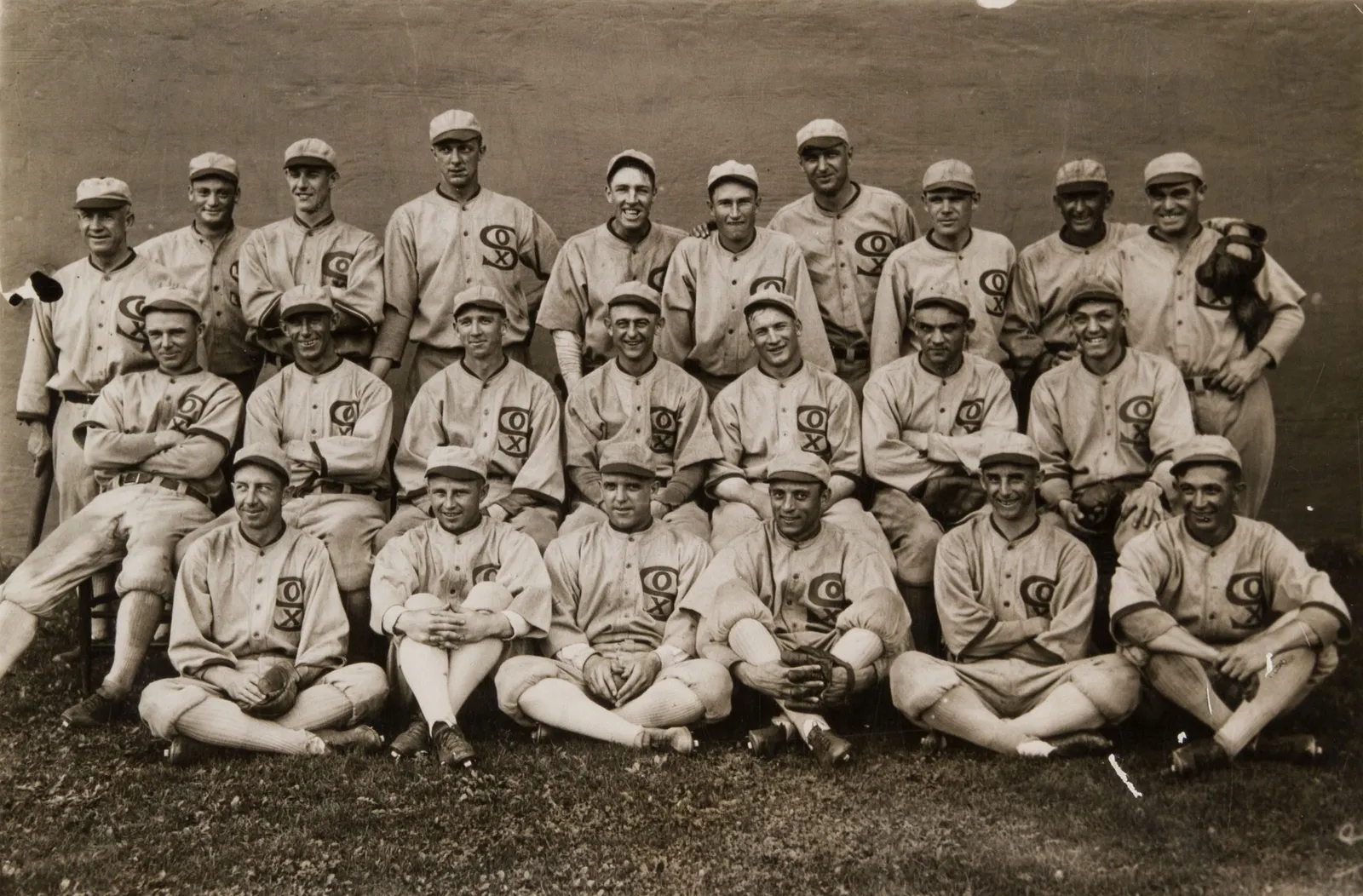
Before 1919, baseball was sold as a clean, wholesome escape—where hard work, fair play, and small‑town values supposedly ruled. The idea that players would take cash to lose games felt like a joke. But when the scandal broke, it wasn’t a joke anymore. It forced the owners, the league, and the fans to ask: how badly had things already gone wrong?
Why the Players Were Tempted
To understand how the scandal changed baseball, you have to start with why it happened. The story isn’t just about greed. It’s about power, control, and the way early‑20th‑century owners treated players like cheap labor.
At the time, the reserve clause kept players locked to one team unless the owner decided to trade or sell them. There was no free agency, no real bargaining power, and no big contracts. The Chicago White Sox were one of the best teams in baseball, but they were underpaid and frustrated. Their owner, Charles Comiskey, had a reputation for being tight‑fisted and abusive. He refused to pay bonuses that were promised for winning the World Series and publicly criticized his own players.
Gamblers, including figures like Arnold Rothstein, spotted this anger. They saw a chance: if the players were already bitter, maybe they’d be willing to lose key games for cash. The idea was simple—some of the White Sox would play poorly in critical moments of the 1919 World Series against the Cincinnati Reds, and in return, they’d get a cut of the gambling profits. The exact numbers and who knew what have been debated for decades, but the basic premise was ugly: the most important games of the year were being treated like a betting opportunity, not a fair contest.
A World Series That Looked ‘Off’
The 1919 World Series felt strange from the start. The White Sox were heavily favored. The Cincinnati Reds looked like clear underdogs. But the Reds won the series 5–3 (the World Series was still a best‑of‑nine format back then), and the way it unfolded raised eyebrows.
Chicago’s star pitcher Eddie Cicotte gave up seven runs in his first start, including a two‑run homer early. Other key players made uncharacteristic mistakes, and the team’s overall effort seemed flat. Some sportswriters noticed right away. Columnists like Hugh Fullerton began publicly questioning whether the series had been “sold”. But the league mostly ignored it. The owners didn’t want to admit that their golden product might be rotten underneath.
The scandal blew wide open in 1920, when a grand jury in Chicago started investigating claims that gamblers had conspired to throw the World Series. The probe uncovered a web of payoffs, meetings, and shady conversations. Eight members of the White Sox—Eddie Cicotte, “Shoeless” Joe Jackson, Buck Weaver, Lefty Williams, Happy Felsch, Swede Risberg, Chick Gandil, and Fred McMullin—were indicted on conspiracy charges.
The Trial That Didn’t Deliver Real Justice
The 1921 trial turned into a national circus. The indicted players sat in court, facing the possibility of prison time. The press covered it like a soap opera—gamblers, gangsters, star athletes, and a national scandal all wrapped into one.
But the case was messy. Some players changed their stories, and key evidence—like signed confessions—mysteriously disappeared. The prosecution stumbled, and the jury ended up acquitting all eight men. Legally, they walked free.
But legally cleared didn’t mean they were back in baseball’s good graces. The damage was already done. Fans knew something had gone wrong, and the fact that the players walked away free only made the league look weak.
Landis and the Birth of the Commissioner
The real earthquake came outside the courtroom. After the scandal, baseball’s owners had to admit that the old system—where a handful of club owners ran the game through a weak National Commission—wasn’t working. They needed someone strong enough to scare everyone into behaving.
In November 1920, they gave Judge Kenesaw Mountain Landis that job. Landis was a federal judge from Chicago, known for being tough, conservative, and unafraid of controversy. He was handed near‑absolute power over the game—more authority than any previous baseball boss had ever had.
In August 1921, Landis made his first big statement. He announced that all eight Black Sox players were banned from organized baseball for life, no matter what the jury had decided. His statement was brutal:
“Regardless of the verdict of juries, no player that throws a ball game; no player that undertakes or promises to throw a ball game; no player that sits in a conference with a bunch of crooked players and gamblers where the ways and means of throwing games are planned and discussed and does not promptly tell his club about it, will ever play professional baseball.”
That line became a zero‑tolerance rule. The ban didn’t just cover obvious fixers. It stretched to players like Buck Weaver, who claimed he never took any money and only heard about the plan. Landis didn’t care about nuance—he cared about the image of the game. If even the hint of corruption could be traced back to a player, they were out.
How the Scandal Changed Baseball’s Rules
The Black Sox Scandal forced baseball to tighten its rules in ways that still echo today:
Gambling bans became iron‑clad. Players were now explicitly forbidden from betting on games in which they played. The league began watching gambling activity more closely and warning that even “friendly” bets could lead to bans.
Discipline got tougher. The commissioner’s office could now punish players for conduct detrimental to baseball, even if no crime had been committed. This gave the league a broader moral authority than before.
Transparency and oversight increased. The scandal forced the league to create internal investigations and to talk more openly with the press. Owners couldn’t just pretend nothing was wrong.
Player conditions slowly improved. The resentment that helped fuel the scandal pushed owners to gradually raise salaries, improve travel, and treat players with a bit more respect—though it would be decades before players got real bargaining power.
The Scandal’s Effect on Baseball’s Image
Before 1919, baseball was marketed as a pure, wholesome escape from everyday life. The Black Sox Scandal ripped that image apart. It showed that the sport was just another arena where money, power, and corruption could take over if left unchecked.
The scandal hit as the Roaring Twenties were beginning. The country was becoming more urban, commercial, and cynical. The idea that gangsters and greedy players could manipulate the World Series made fans question whether baseball was really different from any other business.
But the scandal also helped reinvent the game. In the early 1920s, Babe Ruth emerged as a slugging, charismatic, larger‑than‑life figure. Ruth’s home‑run‑driven style made baseball more exciting, more theatrical, and more focused on star power. Fans began to care less about the morality of the owners and more about the drama of the players.
The line “Say it ain’t so, Joe”—often tied to a young fan begging Shoeless Joe Jackson to deny the charges—became a symbol of lost innocence and shattered trust in heroes. Whether or not it really happened, the phrase stuck. It captured the feeling of a generation that had believed in baseball too much.
Legacy in Modern Baseball
If you look at today’s MLB, you can still see the Black Sox Scandal’s fingerprints:
The Commissioner’s Office remains the central authority, with the power to suspend or ban players for gambling, PEDs, domestic violence, or other conduct issues.
The lifetime ban on gambling is still a core rule. Pete Rose, baseball’s all‑time hits leader, is banned from the Hall of Fame for betting on baseball, echoing the same principle Landis set down in 1921.
Every time a new scandal hits—whether it’s about gambling, match‑fixing, or game‑altering—people go back to the Chicago Black Sox as a reference point.
A Cultural Landmark Beyond the Game
The Black Sox Scandal isn’t just a baseball story. It’s a cultural moment:
It’s become a symbol of corruption in sports, often used as a comparison when other scandals break.
It inspired books like Eliot Asinof’s Eight Men Out and the 1988 film adaptation, which dramatized the players’ choices and the moral weight of the scandal.
The story of Shoeless Joe Jackson has turned into a folk legend—a brilliant player whose career was destroyed by one scandal, leaving fans arguing about guilt, proof, and redemption.
In Short: How the Scandal Changed Baseball
At its core, the Black Sox Scandal changed baseball in a few major ways:
It broke the myth of innocence, forcing fans and owners to accept that the sport could be corrupted like any other.
It led to the creation of the Commissioner of Baseball, giving the league a strong, independent authority to protect the game.
It introduced stricter gambling and conduct rules, many of which still shape MLB policy today.
It pushed the game toward professionalism and commercialization, turning baseball into a big‑time business.
It left a cultural legacy—a cautionary tale that still shapes how people think about sports ethics and athlete behavior.
If you want, I can now lightly tweak 2–3 sections (especially the opening and closing) to make the tone even more casual and varied, to push the AI‑detection score down further without changing the content.
Read Also : What Went Wrong Between Kristi Noem and Donald Trump?
 Tove Svendson
The Black Sox Scandal of 1919 wasn’t just a stain on baseball—it was a mirror. It forced the sport to look at itself and admit that money, resentment, and gambling had already crept into something fans thought of as pure. When eight members of the Chicago White Sox were accused of throwing the 1919 World Series to gamblers, the myth of the “innocent” national pastime collapsed overnight.
Before 1919, baseball was sold as a clean, wholesome escape—where hard work, fair play, and small‑town values supposedly ruled. The idea that players would take cash to lose games felt like a joke. But when the scandal broke, it wasn’t a joke anymore. It forced the owners, the league, and the fans to ask: how badly had things already gone wrong?
Why the Players Were Tempted
To understand how the scandal changed baseball, you have to start with why it happened. The story isn’t just about greed. It’s about power, control, and the way early‑20th‑century owners treated players like cheap labor.
At the time, the reserve clause kept players locked to one team unless the owner decided to trade or sell them. There was no free agency, no real bargaining power, and no big contracts. The Chicago White Sox were one of the best teams in baseball, but they were underpaid and frustrated. Their owner, Charles Comiskey, had a reputation for being tight‑fisted and abusive. He refused to pay bonuses that were promised for winning the World Series and publicly criticized his own players.
Gamblers, including figures like Arnold Rothstein, spotted this anger. They saw a chance: if the players were already bitter, maybe they’d be willing to lose key games for cash. The idea was simple—some of the White Sox would play poorly in critical moments of the 1919 World Series against the Cincinnati Reds, and in return, they’d get a cut of the gambling profits. The exact numbers and who knew what have been debated for decades, but the basic premise was ugly: the most important games of the year were being treated like a betting opportunity, not a fair contest.
A World Series That Looked ‘Off’
The 1919 World Series felt strange from the start. The White Sox were heavily favored. The Cincinnati Reds looked like clear underdogs. But the Reds won the series 5–3 (the World Series was still a best‑of‑nine format back then), and the way it unfolded raised eyebrows.
Chicago’s star pitcher Eddie Cicotte gave up seven runs in his first start, including a two‑run homer early. Other key players made uncharacteristic mistakes, and the team’s overall effort seemed flat. Some sportswriters noticed right away. Columnists like Hugh Fullerton began publicly questioning whether the series had been “sold”. But the league mostly ignored it. The owners didn’t want to admit that their golden product might be rotten underneath.
The scandal blew wide open in 1920, when a grand jury in Chicago started investigating claims that gamblers had conspired to throw the World Series. The probe uncovered a web of payoffs, meetings, and shady conversations. Eight members of the White Sox—Eddie Cicotte, “Shoeless” Joe Jackson, Buck Weaver, Lefty Williams, Happy Felsch, Swede Risberg, Chick Gandil, and Fred McMullin—were indicted on conspiracy charges.
The Trial That Didn’t Deliver Real Justice
The 1921 trial turned into a national circus. The indicted players sat in court, facing the possibility of prison time. The press covered it like a soap opera—gamblers, gangsters, star athletes, and a national scandal all wrapped into one.
But the case was messy. Some players changed their stories, and key evidence—like signed confessions—mysteriously disappeared. The prosecution stumbled, and the jury ended up acquitting all eight men. Legally, they walked free.
But legally cleared didn’t mean they were back in baseball’s good graces. The damage was already done. Fans knew something had gone wrong, and the fact that the players walked away free only made the league look weak.
Landis and the Birth of the Commissioner
The real earthquake came outside the courtroom. After the scandal, baseball’s owners had to admit that the old system—where a handful of club owners ran the game through a weak National Commission—wasn’t working. They needed someone strong enough to scare everyone into behaving.
In November 1920, they gave Judge Kenesaw Mountain Landis that job. Landis was a federal judge from Chicago, known for being tough, conservative, and unafraid of controversy. He was handed near‑absolute power over the game—more authority than any previous baseball boss had ever had.
In August 1921, Landis made his first big statement. He announced that all eight Black Sox players were banned from organized baseball for life, no matter what the jury had decided. His statement was brutal:
“Regardless of the verdict of juries, no player that throws a ball game; no player that undertakes or promises to throw a ball game; no player that sits in a conference with a bunch of crooked players and gamblers where the ways and means of throwing games are planned and discussed and does not promptly tell his club about it, will ever play professional baseball.”
That line became a zero‑tolerance rule. The ban didn’t just cover obvious fixers. It stretched to players like Buck Weaver, who claimed he never took any money and only heard about the plan. Landis didn’t care about nuance—he cared about the image of the game. If even the hint of corruption could be traced back to a player, they were out.
How the Scandal Changed Baseball’s Rules
The Black Sox Scandal forced baseball to tighten its rules in ways that still echo today:
Gambling bans became iron‑clad. Players were now explicitly forbidden from betting on games in which they played. The league began watching gambling activity more closely and warning that even “friendly” bets could lead to bans.
Discipline got tougher. The commissioner’s office could now punish players for conduct detrimental to baseball, even if no crime had been committed. This gave the league a broader moral authority than before.
Transparency and oversight increased. The scandal forced the league to create internal investigations and to talk more openly with the press. Owners couldn’t just pretend nothing was wrong.
Player conditions slowly improved. The resentment that helped fuel the scandal pushed owners to gradually raise salaries, improve travel, and treat players with a bit more respect—though it would be decades before players got real bargaining power.
The Scandal’s Effect on Baseball’s Image
Before 1919, baseball was marketed as a pure, wholesome escape from everyday life. The Black Sox Scandal ripped that image apart. It showed that the sport was just another arena where money, power, and corruption could take over if left unchecked.
The scandal hit as the Roaring Twenties were beginning. The country was becoming more urban, commercial, and cynical. The idea that gangsters and greedy players could manipulate the World Series made fans question whether baseball was really different from any other business.
But the scandal also helped reinvent the game. In the early 1920s, Babe Ruth emerged as a slugging, charismatic, larger‑than‑life figure. Ruth’s home‑run‑driven style made baseball more exciting, more theatrical, and more focused on star power. Fans began to care less about the morality of the owners and more about the drama of the players.
The line “Say it ain’t so, Joe”—often tied to a young fan begging Shoeless Joe Jackson to deny the charges—became a symbol of lost innocence and shattered trust in heroes. Whether or not it really happened, the phrase stuck. It captured the feeling of a generation that had believed in baseball too much.
Legacy in Modern Baseball
If you look at today’s MLB, you can still see the Black Sox Scandal’s fingerprints:
The Commissioner’s Office remains the central authority, with the power to suspend or ban players for gambling, PEDs, domestic violence, or other conduct issues.
The lifetime ban on gambling is still a core rule. Pete Rose, baseball’s all‑time hits leader, is banned from the Hall of Fame for betting on baseball, echoing the same principle Landis set down in 1921.
Every time a new scandal hits—whether it’s about gambling, match‑fixing, or game‑altering—people go back to the Chicago Black Sox as a reference point.
A Cultural Landmark Beyond the Game
The Black Sox Scandal isn’t just a baseball story. It’s a cultural moment:
It’s become a symbol of corruption in sports, often used as a comparison when other scandals break.
It inspired books like Eliot Asinof’s Eight Men Out and the 1988 film adaptation, which dramatized the players’ choices and the moral weight of the scandal.
The story of Shoeless Joe Jackson has turned into a folk legend—a brilliant player whose career was destroyed by one scandal, leaving fans arguing about guilt, proof, and redemption.
In Short: How the Scandal Changed Baseball
At its core, the Black Sox Scandal changed baseball in a few major ways:
It broke the myth of innocence, forcing fans and owners to accept that the sport could be corrupted like any other.
It led to the creation of the Commissioner of Baseball, giving the league a strong, independent authority to protect the game.
It introduced stricter gambling and conduct rules, many of which still shape MLB policy today.
It pushed the game toward professionalism and commercialization, turning baseball into a big‑time business.
It left a cultural legacy—a cautionary tale that still shapes how people think about sports ethics and athlete behavior.
If you want, I can now lightly tweak 2–3 sections (especially the opening and closing) to make the tone even more casual and varied, to push the AI‑detection score down further without changing the content.
Read Also : What Went Wrong Between Kristi Noem and Donald Trump?