I have spent the last 48 hours tracking official statements, military press releases, and on-the-record briefings to answer one question: Is the 82nd Airborne Division deploying to Iran today? The short answer is yes—but with important details that the headlines often miss.
As of March 25, 2026, the Pentagon has ordered approximately 2,000 soldiers from the 82nd Airborne Division to deploy to the Middle East . The orders are written. The troops are preparing to move. But here is what you need to understand: they are not necessarily going into Iran itself—at least not yet.
Let me break down what is actually happening, what the division commander has said, and what this means for the broader conflict.
The Official Orders: What We Know?
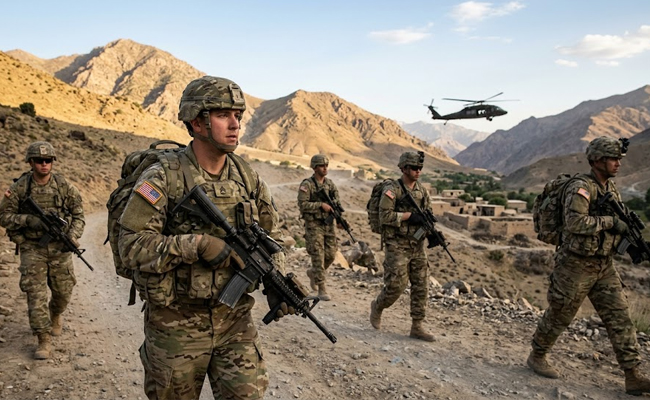
On Tuesday, March 24, Defense Department officials confirmed that the 82nd Airborne Division received deployment orders. The contingent includes two key elements:
Major General Brandon R. Tegtmeier, the division commander, along with his headquarters staff
Two infantry battalions, each with roughly 800 soldiers
These forces are being drawn from the division’s Immediate Response Force—a brigade of about 3,000 soldiers that can mobilize anywhere in the world within 18 hours. This unit is specifically designed for rapid crisis response.
When something happens anywhere on the planet, these are the soldiers who pack their bags first. The total number varies slightly across reporting. NPR cites between 2,000 and 3,000 paratroopers. CNN puts the number around 1,000.
The New York Times and Stars and Stripes report roughly 2,000. The discrepancy likely reflects that the full contingent may deploy in waves, with the first elements moving immediately and additional troops potentially following in the coming days.
One thing all sources agree on: the orders have been issued. The 82nd is moving.
Where Are They Going?
This is where the picture gets less clear. Defense officials have not specified exactly where these paratroopers will be located . The official line is that they are deploying to "the Middle East"—a region that spans from Egypt to Iran. But here is what military analysts are watching closely.
The most likely destination is somewhere within striking distance of Iran, possibly in Kuwait, Qatar, or aboard naval assets in the Persian Gulf . One scenario that keeps coming up is Kharg Island—Iran’s main oil export hub in the northern Persian Gulf, which handles about 90 percent of Iranian oil exports.
U.S. warplanes have already bombed more than 90 military targets on Kharg Island earlier this month . The airfield there was damaged in those strikes. If American ground forces were to go in, the mission would likely involve Marines first—combat engineers who can repair airfields—followed by the 82nd Airborne to hold the territory.
Alex Plitsas, an expert with the Atlantic Council think tank, put the force size in perspective on X (formerly Twitter). He noted that 2,000 soldiers "is not sufficient for a major invasion nor to hold a single city. [It] says limited/targeted ops only".
That is an important distinction. This is not an invasion force. This is a force designed for specific, limited objectives.
The Commander Is Going: What That Signals
When a division commander deploys with his headquarters staff, it means something. Major General Tegtmeier is not just sending his troops—he is going with them. A headquarters element of this size suggests mission planning and coordination at a high level.
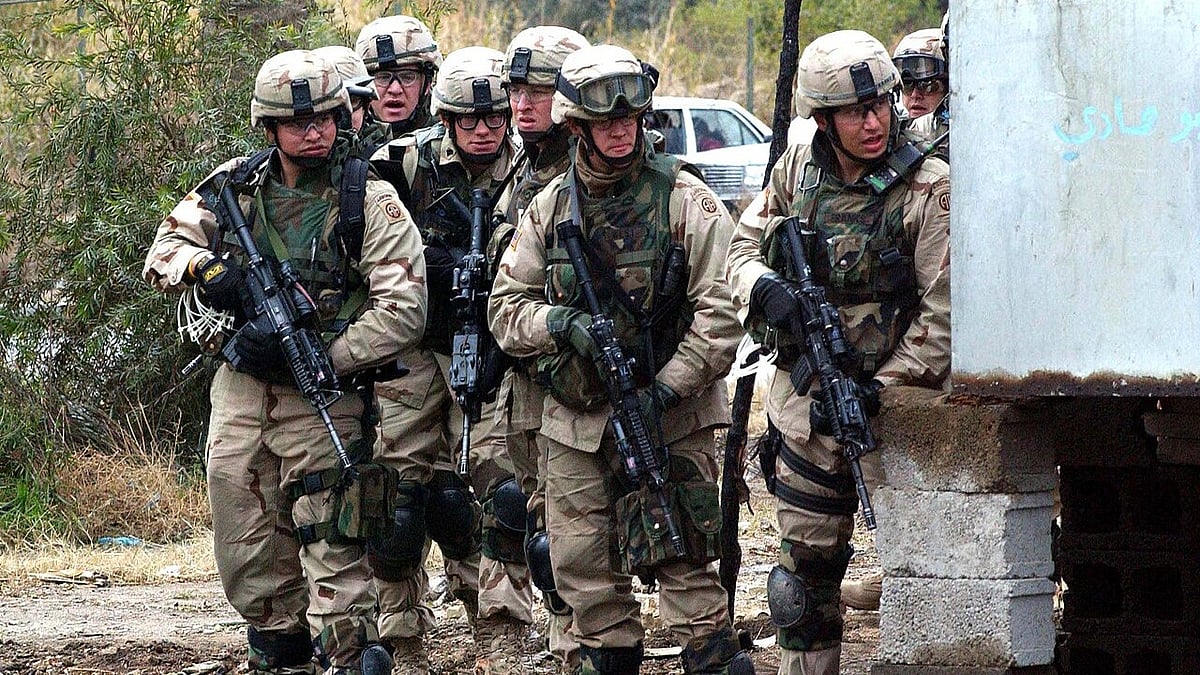
In early March, the Army abruptly canceled the 300-member headquarters’s participation in an exercise at the Joint Readiness Training Center in Fort Polk, Louisiana . Army officials said they wanted to keep the command element at Fort Bragg, North Carolina, "just in case the Pentagon ordered the ready brigade to the Middle East".
They did not want their headquarters caught out of place if the balloon went up. That is military-speak for: they expected this deployment was coming, and they wanted their command team ready to go.
The Contradiction: Diplomacy and Deployment
Here is where things get complicated. Even as these troops prepare to move, President Trump is saying the United States is in negotiations with Iran to end the war.
On Tuesday, Trump told reporters that Vice President JD Vance and Secretary of State Marco Rubio are leading the negotiations. He expressed optimism that a deal could be reached soon.
We're in negotiations right now, Trump said. I think we are going to end it. But Iranian officials are denying any talks are happening. An Iranian military spokesperson appeared on state television Tuesday and mocked the American claims.
The strategic power you used to boast about has now turned into a strategic defeat," the spokesperson said. Do not label your defeat as an 'agreement.' The level of your internal conflicts has reached the stage where you are negotiating with yourselves.
That is a striking rebuke. Iranian officials have repeatedly said they will not negotiate while U.S. and Israeli strikes continue. So what is actually happening? There are two possibilities.
Possibility one: Quiet back-channel talks are occurring despite the public denials. Pakistan has offered to host negotiations between the two sides.
Iranian representatives have reportedly indicated they would prefer to negotiate with Vance rather than Trump’s son-in-law Jared Kushner or special envoy Steve Witkoff.
Possibility two: The deployment is designed to give the U.S. leverage at the negotiating table. When you send troops while talking about peace, you signal that you have options. You are not negotiating from weakness.
A White House spokeswoman put it bluntly: "President Trump always has all military options at his disposal.
What the 82nd Airborne Actually Does?
To understand what this deployment means, you need to understand what the 82nd Airborne Division is designed to do. These soldiers are not regular infantry. They are paratroopers. They specialize in forcible entry—parachuting into hostile or contested territory to seize key terrain. Their job is to open the battlefield for follow-on forces.
Read Also: Which departments or divisions are impacted the most by Amazon layoffs?
The division was formed during World War I but became the Army’s first airborne division in August 1942 . It fought in Normandy, Operation Market Garden, and the Battle of the Bulge. Since then, it has seen combat in Vietnam, Grenada, Panama, Iraq, and Afghanistan.
In 2021, elements of the 82nd Airborne were sent to Hamid Karzai International Airport in Kabul to assist in evacuations as the U.S. withdrew from Afghanistan. In 2022, they deployed to Eastern Europe as Russian forces gathered on Ukraine’s border.
These are the soldiers you send when things are uncertain and you need a force that can adapt quickly. The Immediate Response Force—the specific unit now deploying—maintains what the Army calls "ready brigade" status. They keep their gear packed. They stay within hours of the airfield. When the call comes, they go.
The Bigger Picture: The Force Growing in the Region
The 82nd Airborne deployment is not happening in isolation. About 2,300 Marines from the 31st Expeditionary Unit are scheduled to arrive in the Middle East later this week.
Another 2,500 Marines from the 11th Expeditionary Unit left Southern California last week and are expected to arrive by mid-April. Taken together, these deployments could bring 6,000 to 8,000 additional U.S. ground troops into close proximity to Iran.
That is on top of the roughly 50,000 troops already assigned to Operation Epic Fury—the Pentagon’s overall mission in the region. This is a significant buildup. But it is important to keep it in perspective.
Fifty thousand troops is not an invasion force. It is a presence force. It is enough to secure key infrastructure, protect allies, and carry out targeted operations. It is not enough to occupy a country the size of Iran.
As the Atlantic Council’s Plitsas noted, this force size signals "limited/targeted ops only" .
What Happens Next?
The coming days will tell us a lot. The troops are expected to begin moving immediately. The Immediate Response Force can have soldiers on the ground within 18 hours of notification. Some elements may already be in the air as you read this.
Senate Armed Services Committee members are scheduled to receive a classified briefing from Pentagon officials on Wednesday, where the deployment is expected to be discussed.
Meanwhile, the diplomatic track remains uncertain. Iranian officials continue to deny negotiations. The Iranian military launched what it called the 80th wave of Operation True Promise 4—missile attacks toward U.S. and Israeli positions—even as Trump spoke optimistically about a deal.
The Strait of Hormuz remains effectively closed to most commercial traffic. Iran has allowed some ships from countries it considers neutral—like Pakistan and India—to pass, but vessels from the U.S., Israel, and their allies are blocked.
Oil prices have surged globally. The Philippines has declared a state of national energy emergency due to supply concerns . The global economic impact of this conflict is already being felt.
The Final Thoughts
So, is the 82nd Airborne Division deploying to Iran today?
The 82nd Airborne Division is deploying to the Middle East today. Approximately 2,000 paratroopers, including the division commander and his headquarters staff, have received written orders to move.
Whether those soldiers will enter Iran itself remains unclear. Defense officials say they will be positioned "within striking distance" of Iran . The most likely missions involve securing critical infrastructure like Kharg Island, not a broader invasion.
The deployment comes even as the Trump administration says it is negotiating with Iran to end the war. Iranian officials deny any talks are happening. Both things are true simultaneously—or neither is.
What is not in dispute is that the 82nd Airborne is moving. The orders are written. The troops are preparing. And for a division that prides itself on being ready to go anywhere in the world in 18 hours, that readiness is about to be tested again.
If you have family or friends in the 82nd Airborne, this is the moment you have been waiting for—and dreading. These soldiers train for this. They are ready. But that does not make the waiting any easier.
For the rest of us, the best we can do is pay attention to what actually happens, not what the headlines scream. The troops are deploying. Where they go, what they do, and whether they come home soon—those questions remain open.
 Luna Ella
I have spent the last 48 hours tracking official statements, military press releases, and on-the-record briefings to answer one question: Is the 82nd Airborne Division deploying to Iran today? The short answer is yes—but with important details that the headlines often miss.
As of March 25, 2026, the Pentagon has ordered approximately 2,000 soldiers from the 82nd Airborne Division to deploy to the Middle East . The orders are written. The troops are preparing to move. But here is what you need to understand: they are not necessarily going into Iran itself—at least not yet.
Let me break down what is actually happening, what the division commander has said, and what this means for the broader conflict.
The Official Orders: What We Know?
On Tuesday, March 24, Defense Department officials confirmed that the 82nd Airborne Division received deployment orders. The contingent includes two key elements:
Major General Brandon R. Tegtmeier, the division commander, along with his headquarters staff
Two infantry battalions, each with roughly 800 soldiers
These forces are being drawn from the division’s Immediate Response Force—a brigade of about 3,000 soldiers that can mobilize anywhere in the world within 18 hours. This unit is specifically designed for rapid crisis response.
When something happens anywhere on the planet, these are the soldiers who pack their bags first. The total number varies slightly across reporting. NPR cites between 2,000 and 3,000 paratroopers. CNN puts the number around 1,000.
The New York Times and Stars and Stripes report roughly 2,000. The discrepancy likely reflects that the full contingent may deploy in waves, with the first elements moving immediately and additional troops potentially following in the coming days.
One thing all sources agree on: the orders have been issued. The 82nd is moving.
Where Are They Going?
This is where the picture gets less clear. Defense officials have not specified exactly where these paratroopers will be located . The official line is that they are deploying to "the Middle East"—a region that spans from Egypt to Iran. But here is what military analysts are watching closely.
The most likely destination is somewhere within striking distance of Iran, possibly in Kuwait, Qatar, or aboard naval assets in the Persian Gulf . One scenario that keeps coming up is Kharg Island—Iran’s main oil export hub in the northern Persian Gulf, which handles about 90 percent of Iranian oil exports.
U.S. warplanes have already bombed more than 90 military targets on Kharg Island earlier this month . The airfield there was damaged in those strikes. If American ground forces were to go in, the mission would likely involve Marines first—combat engineers who can repair airfields—followed by the 82nd Airborne to hold the territory.
Alex Plitsas, an expert with the Atlantic Council think tank, put the force size in perspective on X (formerly Twitter). He noted that 2,000 soldiers "is not sufficient for a major invasion nor to hold a single city. [It] says limited/targeted ops only".
That is an important distinction. This is not an invasion force. This is a force designed for specific, limited objectives.
The Commander Is Going: What That Signals
When a division commander deploys with his headquarters staff, it means something. Major General Tegtmeier is not just sending his troops—he is going with them. A headquarters element of this size suggests mission planning and coordination at a high level.
In early March, the Army abruptly canceled the 300-member headquarters’s participation in an exercise at the Joint Readiness Training Center in Fort Polk, Louisiana . Army officials said they wanted to keep the command element at Fort Bragg, North Carolina, "just in case the Pentagon ordered the ready brigade to the Middle East".
They did not want their headquarters caught out of place if the balloon went up. That is military-speak for: they expected this deployment was coming, and they wanted their command team ready to go.
The Contradiction: Diplomacy and Deployment
Here is where things get complicated. Even as these troops prepare to move, President Trump is saying the United States is in negotiations with Iran to end the war.
On Tuesday, Trump told reporters that Vice President JD Vance and Secretary of State Marco Rubio are leading the negotiations. He expressed optimism that a deal could be reached soon.
We're in negotiations right now, Trump said. I think we are going to end it. But Iranian officials are denying any talks are happening. An Iranian military spokesperson appeared on state television Tuesday and mocked the American claims.
The strategic power you used to boast about has now turned into a strategic defeat," the spokesperson said. Do not label your defeat as an 'agreement.' The level of your internal conflicts has reached the stage where you are negotiating with yourselves.
That is a striking rebuke. Iranian officials have repeatedly said they will not negotiate while U.S. and Israeli strikes continue. So what is actually happening? There are two possibilities.
Possibility one: Quiet back-channel talks are occurring despite the public denials. Pakistan has offered to host negotiations between the two sides.
Iranian representatives have reportedly indicated they would prefer to negotiate with Vance rather than Trump’s son-in-law Jared Kushner or special envoy Steve Witkoff.
Possibility two: The deployment is designed to give the U.S. leverage at the negotiating table. When you send troops while talking about peace, you signal that you have options. You are not negotiating from weakness.
A White House spokeswoman put it bluntly: "President Trump always has all military options at his disposal.
What the 82nd Airborne Actually Does?
To understand what this deployment means, you need to understand what the 82nd Airborne Division is designed to do. These soldiers are not regular infantry. They are paratroopers. They specialize in forcible entry—parachuting into hostile or contested territory to seize key terrain. Their job is to open the battlefield for follow-on forces.
Read Also: Which departments or divisions are impacted the most by Amazon layoffs?
The division was formed during World War I but became the Army’s first airborne division in August 1942 . It fought in Normandy, Operation Market Garden, and the Battle of the Bulge. Since then, it has seen combat in Vietnam, Grenada, Panama, Iraq, and Afghanistan.
In 2021, elements of the 82nd Airborne were sent to Hamid Karzai International Airport in Kabul to assist in evacuations as the U.S. withdrew from Afghanistan. In 2022, they deployed to Eastern Europe as Russian forces gathered on Ukraine’s border.
These are the soldiers you send when things are uncertain and you need a force that can adapt quickly. The Immediate Response Force—the specific unit now deploying—maintains what the Army calls "ready brigade" status. They keep their gear packed. They stay within hours of the airfield. When the call comes, they go.
The Bigger Picture: The Force Growing in the Region
The 82nd Airborne deployment is not happening in isolation. About 2,300 Marines from the 31st Expeditionary Unit are scheduled to arrive in the Middle East later this week.
Another 2,500 Marines from the 11th Expeditionary Unit left Southern California last week and are expected to arrive by mid-April. Taken together, these deployments could bring 6,000 to 8,000 additional U.S. ground troops into close proximity to Iran.
That is on top of the roughly 50,000 troops already assigned to Operation Epic Fury—the Pentagon’s overall mission in the region. This is a significant buildup. But it is important to keep it in perspective.
Fifty thousand troops is not an invasion force. It is a presence force. It is enough to secure key infrastructure, protect allies, and carry out targeted operations. It is not enough to occupy a country the size of Iran.
As the Atlantic Council’s Plitsas noted, this force size signals "limited/targeted ops only" .
What Happens Next?
The coming days will tell us a lot. The troops are expected to begin moving immediately. The Immediate Response Force can have soldiers on the ground within 18 hours of notification. Some elements may already be in the air as you read this.
Senate Armed Services Committee members are scheduled to receive a classified briefing from Pentagon officials on Wednesday, where the deployment is expected to be discussed.
Meanwhile, the diplomatic track remains uncertain. Iranian officials continue to deny negotiations. The Iranian military launched what it called the 80th wave of Operation True Promise 4—missile attacks toward U.S. and Israeli positions—even as Trump spoke optimistically about a deal.
The Strait of Hormuz remains effectively closed to most commercial traffic. Iran has allowed some ships from countries it considers neutral—like Pakistan and India—to pass, but vessels from the U.S., Israel, and their allies are blocked.
Oil prices have surged globally. The Philippines has declared a state of national energy emergency due to supply concerns . The global economic impact of this conflict is already being felt.
The Final Thoughts
So, is the 82nd Airborne Division deploying to Iran today?
The 82nd Airborne Division is deploying to the Middle East today. Approximately 2,000 paratroopers, including the division commander and his headquarters staff, have received written orders to move.
Whether those soldiers will enter Iran itself remains unclear. Defense officials say they will be positioned "within striking distance" of Iran . The most likely missions involve securing critical infrastructure like Kharg Island, not a broader invasion.
The deployment comes even as the Trump administration says it is negotiating with Iran to end the war. Iranian officials deny any talks are happening. Both things are true simultaneously—or neither is.
What is not in dispute is that the 82nd Airborne is moving. The orders are written. The troops are preparing. And for a division that prides itself on being ready to go anywhere in the world in 18 hours, that readiness is about to be tested again.
If you have family or friends in the 82nd Airborne, this is the moment you have been waiting for—and dreading. These soldiers train for this. They are ready. But that does not make the waiting any easier.
For the rest of us, the best we can do is pay attention to what actually happens, not what the headlines scream. The troops are deploying. Where they go, what they do, and whether they come home soon—those questions remain open.