The Great Lakes of North America are not just large bodies of water. They are massive inland seas that hold enough water to cover the entire continent. If you look at a map, you will see five lakes—Superior, Michigan, Huron, Erie, and Ontario—sitting on the border of the United States and Canada. Together, they form the largest fresh surface water system on our planet (Great Lakes Commission, n.d.).
For anyone living in India or elsewhere, it is hard to imagine the scale of these lakes. They are so big that they have their own weather patterns, tides, and even thousands of shipwrecks hidden at the bottom. In this article, we will look at five amazing facts that make the Great Lakes a true wonder of the natural world.
1. They Hold One-Fifth of the World's Fresh Surface Water
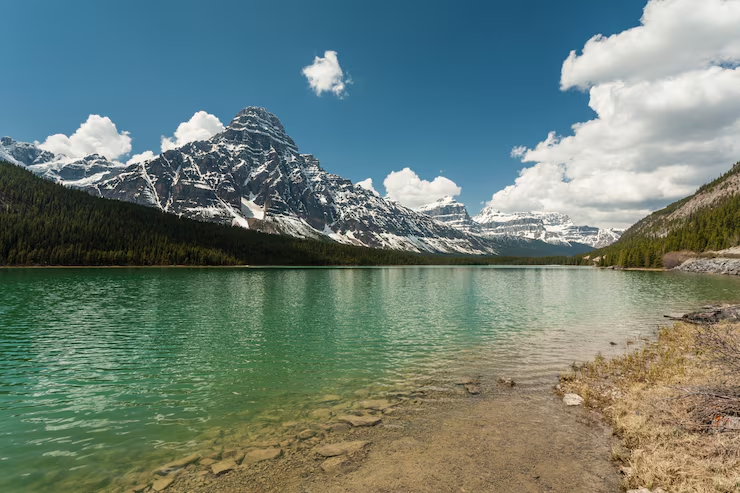
The most mind-blowing fact about the Great Lakes is their sheer volume. These five lakes contain about six quadrillion gallons of water (Great Lakes Commission, n.d.). To put that in simpler terms, they hold 20%—or one-fifth—of the entire world's supply of fresh surface water (Great Lakes, Great Read, n.d.).
If you took all the water from the Great Lakes and spread it evenly across the lower 48 states of the US, the entire country would be under about 9.5 feet of water. This water is vital for life, providing drinking water for more than 40 million people across two countries (Great Lakes Commission, n.d.). Because 99% of this water originally came from melting glaciers over 10,000 years ago, it is a non-replenishable resource that requires careful protection (Great Lakes, Great Read, n.d.).
2. Lake Superior Is a Freshwater "Ocean"
Lake Superior is the largest, deepest, and coldest of all the Great Lakes. It is so big that it could actually hold all the water from the other four Great Lakes plus three more lakes the size of Lake Erie (National Wildlife Federation, n.d.).
Because of its size, Lake Superior behaves more like an ocean than a lake. It has:
Massive Waves: During storms, waves can reach heights of over 20 to 30 feet.
Deep Basins: Its maximum depth is 1,332 feet, which is deep enough to hide the Empire State Building (Shipwreck Explorers, n.d.).
Vast Surface: Its surface area is roughly the same size as the country of Austria.
The indigenous Ojibwe people called it Gichigami, which means “a great lake” (Great Lakes, Great Read, n.d.). It is so large that it takes nearly 200 years for a single drop of water to cycle through it.
3. They Are Home to Over 6,000 Shipwrecks
The Great Lakes are famous for being dangerous. Over the last few centuries, they have served as a major highway for ships carrying cargo like iron ore and coal. However, the lakes are known for sudden, violent storms that can sink even the largest vessels.
It is estimated that there are more than 6,000 shipwrecks scattered across the bottom of the Great Lakes (Shipwreck Explorers, n.d.). One of the most famous is the SS Edmund Fitzgerald, which sank in Lake Superior in 1975 during a massive storm.
What is even more interesting is how well these ships are preserved. Unlike the salty ocean, the cold, fresh water of the Great Lakes acts like a refrigerator. This prevents wood and metal from rotting quickly. Divers often find ships that are hundreds of years old still standing perfectly upright with their masts and cargo intact (Shipwreck Explorers, n.d.).
4. Lake Michigan Has the World's Largest Freshwater Dunes
While you might expect to see sand dunes in a desert or by the ocean, Lake Michigan is home to the largest system of freshwater sand dunes on Earth (Great Lakes, Great Read, n.d.). These dunes were formed thousands of years ago as the glaciers retreated and high winds blew sand along the shoreline.
The most famous of these are the Sleeping Bear Dunes. These sand hills can rise hundreds of feet above the lake level. They provide a unique home for many plants and animals that cannot be found anywhere else. Walking on these dunes feels like being at the seashore, especially since you cannot see the other side of the lake from the beach.
5. Two of the Lakes Are Technically One
If you look at Lake Michigan and Lake Huron on a map, they appear to be two separate bodies of water connected by a small gap called the Straits of Mackinac. However, hydrologically speaking, they are actually one giant lake (Great Lakes, Great Read, n.d.).
Because the water level in both lakes stays at the same elevation and they flow back and forth through the five-mile-wide straits, scientists often refer to them as "Lake Michigan-Huron. " If you measure them as one lake, they would be the largest freshwater lake in the world by surface area, even beating out Lake Superior. To bridge this gap, the famous Mackinac Bridge was built in 1957, stretching five miles across the water to connect the two parts of the state of Michigan (EBSCO, n.d.).
Conclusion
The Great Lakes are a massive part of our planet's natural heritage. From the freezing depths of Lake Superior to the sandy shores of Lake Michigan, these "inland seas" are full of history and beauty. Whether you are interested in the 6,000 shipwrecks or the fact that they hold 20% of our fresh water, there is no denying that the Great Lakes are truly great.
Read Also : What Are The Top Technology Trends In 2026
 Evelyn Harper
The Great Lakes of North America are not just large bodies of water. They are massive inland seas that hold enough water to cover the entire continent. If you look at a map, you will see five lakes—Superior, Michigan, Huron, Erie, and Ontario—sitting on the border of the United States and Canada. Together, they form the largest fresh surface water system on our planet (Great Lakes Commission, n.d.).
For anyone living in India or elsewhere, it is hard to imagine the scale of these lakes. They are so big that they have their own weather patterns, tides, and even thousands of shipwrecks hidden at the bottom. In this article, we will look at five amazing facts that make the Great Lakes a true wonder of the natural world.
1. They Hold One-Fifth of the World's Fresh Surface Water
The most mind-blowing fact about the Great Lakes is their sheer volume. These five lakes contain about six quadrillion gallons of water (Great Lakes Commission, n.d.). To put that in simpler terms, they hold 20%—or one-fifth—of the entire world's supply of fresh surface water (Great Lakes, Great Read, n.d.).
If you took all the water from the Great Lakes and spread it evenly across the lower 48 states of the US, the entire country would be under about 9.5 feet of water. This water is vital for life, providing drinking water for more than 40 million people across two countries (Great Lakes Commission, n.d.). Because 99% of this water originally came from melting glaciers over 10,000 years ago, it is a non-replenishable resource that requires careful protection (Great Lakes, Great Read, n.d.).
2. Lake Superior Is a Freshwater "Ocean"
Lake Superior is the largest, deepest, and coldest of all the Great Lakes. It is so big that it could actually hold all the water from the other four Great Lakes plus three more lakes the size of Lake Erie (National Wildlife Federation, n.d.).
Because of its size, Lake Superior behaves more like an ocean than a lake. It has:
Massive Waves: During storms, waves can reach heights of over 20 to 30 feet.
Deep Basins: Its maximum depth is 1,332 feet, which is deep enough to hide the Empire State Building (Shipwreck Explorers, n.d.).
Vast Surface: Its surface area is roughly the same size as the country of Austria.
The indigenous Ojibwe people called it Gichigami, which means “a great lake” (Great Lakes, Great Read, n.d.). It is so large that it takes nearly 200 years for a single drop of water to cycle through it.
3. They Are Home to Over 6,000 Shipwrecks
The Great Lakes are famous for being dangerous. Over the last few centuries, they have served as a major highway for ships carrying cargo like iron ore and coal. However, the lakes are known for sudden, violent storms that can sink even the largest vessels.
It is estimated that there are more than 6,000 shipwrecks scattered across the bottom of the Great Lakes (Shipwreck Explorers, n.d.). One of the most famous is the SS Edmund Fitzgerald, which sank in Lake Superior in 1975 during a massive storm.
What is even more interesting is how well these ships are preserved. Unlike the salty ocean, the cold, fresh water of the Great Lakes acts like a refrigerator. This prevents wood and metal from rotting quickly. Divers often find ships that are hundreds of years old still standing perfectly upright with their masts and cargo intact (Shipwreck Explorers, n.d.).
4. Lake Michigan Has the World's Largest Freshwater Dunes
While you might expect to see sand dunes in a desert or by the ocean, Lake Michigan is home to the largest system of freshwater sand dunes on Earth (Great Lakes, Great Read, n.d.). These dunes were formed thousands of years ago as the glaciers retreated and high winds blew sand along the shoreline.
The most famous of these are the Sleeping Bear Dunes. These sand hills can rise hundreds of feet above the lake level. They provide a unique home for many plants and animals that cannot be found anywhere else. Walking on these dunes feels like being at the seashore, especially since you cannot see the other side of the lake from the beach.
5. Two of the Lakes Are Technically One
If you look at Lake Michigan and Lake Huron on a map, they appear to be two separate bodies of water connected by a small gap called the Straits of Mackinac. However, hydrologically speaking, they are actually one giant lake (Great Lakes, Great Read, n.d.).
Because the water level in both lakes stays at the same elevation and they flow back and forth through the five-mile-wide straits, scientists often refer to them as "Lake Michigan-Huron. " If you measure them as one lake, they would be the largest freshwater lake in the world by surface area, even beating out Lake Superior. To bridge this gap, the famous Mackinac Bridge was built in 1957, stretching five miles across the water to connect the two parts of the state of Michigan (EBSCO, n.d.).
Conclusion
The Great Lakes are a massive part of our planet's natural heritage. From the freezing depths of Lake Superior to the sandy shores of Lake Michigan, these "inland seas" are full of history and beauty. Whether you are interested in the 6,000 shipwrecks or the fact that they hold 20% of our fresh water, there is no denying that the Great Lakes are truly great.
Read Also : What Are The Top Technology Trends In 2026