Ever wondered why your phone predicts your next word so well, but can't whip up a poem on the spot? That's the world of AI in a nutshell. Traditional AI has been around for decades, crunching data to make smart choices. Now, Generative AI is stealing the show by creating new stuff like images or stories. If you're curious about what is the difference between Generative AI and Traditional AI, this guide breaks it down simply. We'll explore how they work, their uses, and why it matters for everyday life. Stick around—you'll see why one predicts and the other invents.
How Traditional AI Works?
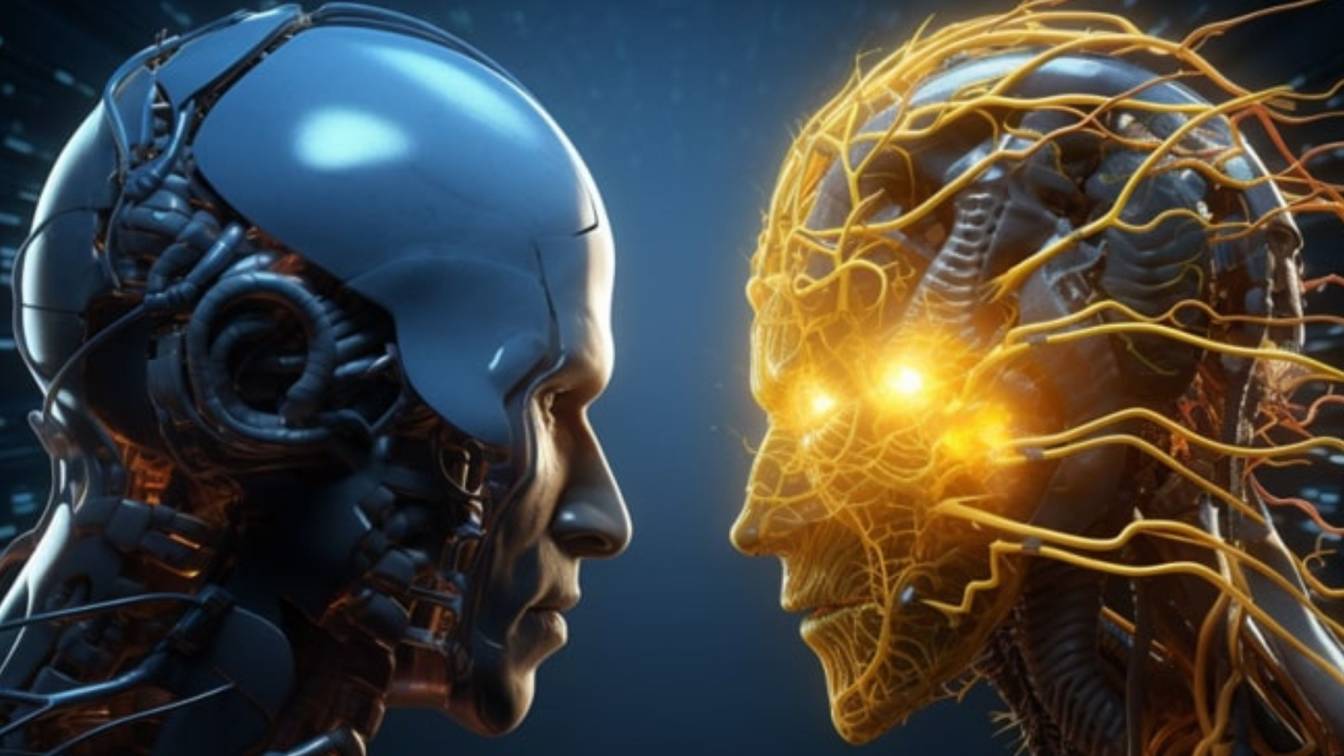
Traditional AI, also called rule-based or classical AI, follows strict instructions to solve problems. Think of it like a recipe book. It uses predefined rules and patterns from data to make decisions. For example, a spam filter scans emails for keywords like "free money" and flags them. No creativity here—just logic.
At its core, Traditional AI relies on algorithms like decision trees or machine learning models that learn from labeled data. You feed it examples: "This is a cat photo, this isn't." It spots patterns and applies them to new data. It's great for tasks needing accuracy, like recommending movies based on your past watches. But it can't handle surprises well. If the data changes, you retrain it.
This approach shines in structured environments. Banks use it for fraud detection by checking transaction patterns against known scams. It's reliable because humans set the rules. Over time, improvements came with machine learning, where AI tweaks itself slightly. Still, it mimics human rules rather than inventing new ones.
One key limit: it needs tons of human input upfront. Engineers label data and code rules. That's why Traditional AI feels predictable. In daily life, your GPS uses it to find the fastest route by calculating distances and traffic data. Simple, effective, no magic.
Key Takeaway: Traditional AI excels at following patterns for precise, rule-driven tasks.
Read: AI Language Learning Apps For Beginners
Inside Generative AI Explained
Generative AI takes a wild leap. It doesn't just analyze—it creates. Picture an artist starting with a blank canvas, dreaming up something new. Tools like this generate text, images, or music from simple prompts. Say "draw a sunset over mountains," and it spits out a unique picture.
Powered by models like transformers, Generative AI learns from massive datasets of human creations. It predicts what comes next in a sequence. For writing, it guesses the next word based on billions of sentences it's seen. Over layers of math, this builds full stories or songs. It's probabilistic, meaning outputs vary each time— that's the "generative" magic.
Unlike rigid systems, it handles fuzzy inputs. No need for exact labels; it infers from context. This makes it versatile for creative work. A marketer might ask for ad copy, getting fresh ideas instantly. But watch out: it can "hallucinate" facts since it remixes patterns, not memorizes truths.
In practice, Generative AI speeds up innovation. Designers prototype logos in seconds. Writers beat blocks with idea sparks. It's trained on diverse data, so outputs feel human-like. Yet, it needs guardrails to avoid biases from training data.
Key Takeaway: Generative AI creates original content by predicting and remixing patterns creatively.
Core Differences in Functionality
So, what is the difference between Generative AI and Traditional AI at the heart? Traditional AI reacts and classifies. It takes input, matches it to rules, and outputs a decision—like "yes, this loan is approved" after checking credit scores. Generative AI produces something novel, like a custom loan explanation tailored to your situation.
Functionally, Traditional AI optimizes known tasks. It predicts stock prices from historical trends or sorts customer queries into categories. Speed and precision rule. Generative AI explores unknowns, generating code snippets or video edits from descriptions. It's open-ended.
Data handling differs too. Traditional AI thrives on structured, labeled data—think spreadsheets of sales figures. Generative AI gobbles unstructured data like books, photos, or videos, learning subtle connections. Computationally, generative models demand more power; they run huge neural networks.
Error styles vary. Traditional AI fails predictably on edge cases. Generative AI might invent plausible but wrong details, like a fake historical event in a story. Use cases highlight this: Traditional AI powers medical diagnostics by matching symptoms. Generative AI simulates drug designs by inventing molecular structures.
In teams, Traditional AI automates routine jobs quietly. Generative AI collaborates, brainstorming with humans. The shift feels like moving from a calculator to a co-writer.
Key Takeaway: Traditional AI classifies and predicts; Generative AI invents and expands.
Real-World Applications Compared
Let's see Traditional AI and Generative AI in action. Traditional AI rules industries needing reliability. In healthcare, it analyzes X-rays for tumors by comparing to trained images—saving doctors time with 95% accuracy in studies. Factories use it for quality control, spotting defects on assembly lines via pattern recognition.
E-commerce leans on it for personalized recommendations. Ever see "customers also bought" lists? That's Traditional AI crunching your history. Self-driving cars use it to detect pedestrians from sensor data, making split-second stops.
Now, Generative AI transforms creativity. Artists generate concept art for games, iterating designs fast. Businesses craft email campaigns; input a product, get 10 taglines. In education, it personalizes lessons, creating quizzes from a topic.
Coding speeds up with it—developers debug by generating fixes. Music producers remix tracks effortlessly. Even scientists model climate scenarios by generating data variations.
Traditional AI scales efficiency; Generative AI fuels innovation. A company might use traditional for inventory tracking and generative for marketing visuals. Together, they amplify each other.
One practical tip: start small. Test Traditional AI for data sorting, then layer Generative AI for reports.
Key Takeaway: Traditional AI boosts efficiency in routine tasks; Generative AI sparks creative breakthroughs.
Pros and Cons Breakdown
Pros of Traditional AI
High accuracy in predictable settings, like chess engines beating humans.
Interpretable: You trace decisions back to rules, building trust.
Efficient on small datasets; quick to deploy.
Cost-effective for targeted tasks, no massive computing needed.
Secure: Less risk of outputting harmful inventions.
Cons of Traditional AI
Struggles with new scenarios; needs constant retraining.
Lacks flexibility for creative or vague problems.
Pros of Generative AI
Versatile creation: From art to code, it handles diverse requests.
Scales ideas: Generates thousands of options fast.
Human-like outputs boost engagement in content.
Rapid prototyping for businesses and creators.
Cons of Generative AI
Hallucinations: Can produce false info confidently.
Resource-heavy: Trains on huge data, high energy use.
Bias risks: Mirrors flaws in training data.
Hard to control: Outputs vary, needing human review.
Balancing both? Use Traditional AI for core logic, Generative AI for flair. A real-world fix: fact-check generative outputs with traditional validators.
Key Takeaway: Weigh reliability against creativity when choosing between them.
Training and Tech Under the Hood
Training separates what is the difference between Generative AI and Traditional AI most clearly. Traditional AI uses supervised learning. Humans label data—"this email is spam"—then the model learns boundaries. Techniques like regression fit lines to data points for predictions. It's like teaching a kid with flashcards.
Generative AI employs unsupervised or self-supervised methods. It studies raw data, learning distributions. GANs pit generator against discriminator for realistic fakes. Transformers process sequences with attention mechanisms, weighing word importance.
Compute needs explode for generative: billions of parameters tuned via backpropagation. Traditional AI manages with simpler neural nets or rules. Data scale differs—traditional needs thousands of examples; generative devours petabytes.
Updates favor generative's adaptability. Fine-tuning lets it specialize quickly, like adapting a general writer for legal docs. Traditional AI requires full retrains.
Ethically, Generative AI demands diverse data to curb biases; Traditional AI inherits labeler flaws. Practical advice: audit training data regularly. Tools evolve—hybrid models blend both for best results.
Key Takeaway: Generative AI trains on vast, unstructured data for creation; Traditional AI on labeled sets for precision.
Future Trends and Hybrid Possibilities
The line blurs as Traditional AI and Generative AI merge. Hybrids like retrieval-augmented generation pull facts via traditional search before generating responses—reducing errors. Expect more in 2026 and beyond.
Generative AI will personalize everything: custom workouts from your fitness data. Traditional AI ensures safety, validating outputs. Industries like law use traditional for case matching, generative for drafting briefs.
Challenges ahead: energy use and ethics. Generative AI guzzles power; greener models emerge. Regulations push transparency—Traditional AI's explainability helps here.
For you, learn both. Start with free tools to classify data traditionally, then generate insights. Jobs evolve: analysts become curators of AI outputs.
Exciting times. What is the difference between Generative AI and Traditional AI? One builds on the past; the other shapes the future. Together, they redefine work.
Key Takeaway: Hybrids combining both will dominate, blending precision with creativity.
FAQs
1. Can Generative AI replace Traditional AI completely?
No, they complement each other. Generative AI creates ideas, but Traditional AI verifies them with rules and data. Use generative for brainstorming, traditional for final checks—like generating a report then fact-checking it.
2. Is Generative AI more accurate than Traditional AI?
Not always. Traditional AI wins on structured tasks with labeled data. Generative AI shines in creativity but risks errors. Pick based on need: precision for finance, invention for design.
3. How do I choose between Generative AI and Traditional AI for my project?
Ask: Do I need to create new content or analyze existing? Go generative for writing/images; traditional for predictions/classification. Test small—many platforms offer both.
4. What's an easy example of each?
Traditional AI: Your email's spam filter. Generative AI: Asking a chatbot to write a short story. One blocks junk; the other makes fun.
5. Will Generative AI cause more job losses than Traditional AI?
Both automate, but generative shifts creative roles to oversight. Traditional AI handled data entry; now focus on upskilling in prompting and validation for new opportunities.
 Willow Stella
 calculadora dehoras
Ever wondered why your phone predicts your next word so well, but can't whip up a poem on the spot? That's the world of AI in a nutshell. Traditional AI has been around for decades, crunching data to make smart choices. Now, Generative AI is stealing the show by creating new stuff like images or stories. If you're curious about what is the difference between Generative AI and Traditional AI, this guide breaks it down simply. We'll explore how they work, their uses, and why it matters for everyday life. Stick around—you'll see why one predicts and the other invents.
How Traditional AI Works?
Traditional AI, also called rule-based or classical AI, follows strict instructions to solve problems. Think of it like a recipe book. It uses predefined rules and patterns from data to make decisions. For example, a spam filter scans emails for keywords like "free money" and flags them. No creativity here—just logic.
At its core, Traditional AI relies on algorithms like decision trees or machine learning models that learn from labeled data. You feed it examples: "This is a cat photo, this isn't." It spots patterns and applies them to new data. It's great for tasks needing accuracy, like recommending movies based on your past watches. But it can't handle surprises well. If the data changes, you retrain it.
This approach shines in structured environments. Banks use it for fraud detection by checking transaction patterns against known scams. It's reliable because humans set the rules. Over time, improvements came with machine learning, where AI tweaks itself slightly. Still, it mimics human rules rather than inventing new ones.
One key limit: it needs tons of human input upfront. Engineers label data and code rules. That's why Traditional AI feels predictable. In daily life, your GPS uses it to find the fastest route by calculating distances and traffic data. Simple, effective, no magic.
Key Takeaway: Traditional AI excels at following patterns for precise, rule-driven tasks.
Read: AI Language Learning Apps For Beginners
Inside Generative AI Explained
Generative AI takes a wild leap. It doesn't just analyze—it creates. Picture an artist starting with a blank canvas, dreaming up something new. Tools like this generate text, images, or music from simple prompts. Say "draw a sunset over mountains," and it spits out a unique picture.
Powered by models like transformers, Generative AI learns from massive datasets of human creations. It predicts what comes next in a sequence. For writing, it guesses the next word based on billions of sentences it's seen. Over layers of math, this builds full stories or songs. It's probabilistic, meaning outputs vary each time— that's the "generative" magic.
Unlike rigid systems, it handles fuzzy inputs. No need for exact labels; it infers from context. This makes it versatile for creative work. A marketer might ask for ad copy, getting fresh ideas instantly. But watch out: it can "hallucinate" facts since it remixes patterns, not memorizes truths.
In practice, Generative AI speeds up innovation. Designers prototype logos in seconds. Writers beat blocks with idea sparks. It's trained on diverse data, so outputs feel human-like. Yet, it needs guardrails to avoid biases from training data.
Key Takeaway: Generative AI creates original content by predicting and remixing patterns creatively.
Core Differences in Functionality
So, what is the difference between Generative AI and Traditional AI at the heart? Traditional AI reacts and classifies. It takes input, matches it to rules, and outputs a decision—like "yes, this loan is approved" after checking credit scores. Generative AI produces something novel, like a custom loan explanation tailored to your situation.
Functionally, Traditional AI optimizes known tasks. It predicts stock prices from historical trends or sorts customer queries into categories. Speed and precision rule. Generative AI explores unknowns, generating code snippets or video edits from descriptions. It's open-ended.
Data handling differs too. Traditional AI thrives on structured, labeled data—think spreadsheets of sales figures. Generative AI gobbles unstructured data like books, photos, or videos, learning subtle connections. Computationally, generative models demand more power; they run huge neural networks.
Error styles vary. Traditional AI fails predictably on edge cases. Generative AI might invent plausible but wrong details, like a fake historical event in a story. Use cases highlight this: Traditional AI powers medical diagnostics by matching symptoms. Generative AI simulates drug designs by inventing molecular structures.
In teams, Traditional AI automates routine jobs quietly. Generative AI collaborates, brainstorming with humans. The shift feels like moving from a calculator to a co-writer.
Key Takeaway: Traditional AI classifies and predicts; Generative AI invents and expands.
Real-World Applications Compared
Let's see Traditional AI and Generative AI in action. Traditional AI rules industries needing reliability. In healthcare, it analyzes X-rays for tumors by comparing to trained images—saving doctors time with 95% accuracy in studies. Factories use it for quality control, spotting defects on assembly lines via pattern recognition.
E-commerce leans on it for personalized recommendations. Ever see "customers also bought" lists? That's Traditional AI crunching your history. Self-driving cars use it to detect pedestrians from sensor data, making split-second stops.
Now, Generative AI transforms creativity. Artists generate concept art for games, iterating designs fast. Businesses craft email campaigns; input a product, get 10 taglines. In education, it personalizes lessons, creating quizzes from a topic.
Coding speeds up with it—developers debug by generating fixes. Music producers remix tracks effortlessly. Even scientists model climate scenarios by generating data variations.
Traditional AI scales efficiency; Generative AI fuels innovation. A company might use traditional for inventory tracking and generative for marketing visuals. Together, they amplify each other.
One practical tip: start small. Test Traditional AI for data sorting, then layer Generative AI for reports.
Key Takeaway: Traditional AI boosts efficiency in routine tasks; Generative AI sparks creative breakthroughs.
Pros and Cons Breakdown
Pros of Traditional AI
High accuracy in predictable settings, like chess engines beating humans.
Interpretable: You trace decisions back to rules, building trust.
Efficient on small datasets; quick to deploy.
Cost-effective for targeted tasks, no massive computing needed.
Secure: Less risk of outputting harmful inventions.
Cons of Traditional AI
Struggles with new scenarios; needs constant retraining.
Lacks flexibility for creative or vague problems.
Pros of Generative AI
Versatile creation: From art to code, it handles diverse requests.
Scales ideas: Generates thousands of options fast.
Human-like outputs boost engagement in content.
Rapid prototyping for businesses and creators.
Cons of Generative AI
Hallucinations: Can produce false info confidently.
Resource-heavy: Trains on huge data, high energy use.
Bias risks: Mirrors flaws in training data.
Hard to control: Outputs vary, needing human review.
Balancing both? Use Traditional AI for core logic, Generative AI for flair. A real-world fix: fact-check generative outputs with traditional validators.
Key Takeaway: Weigh reliability against creativity when choosing between them.
Training and Tech Under the Hood
Training separates what is the difference between Generative AI and Traditional AI most clearly. Traditional AI uses supervised learning. Humans label data—"this email is spam"—then the model learns boundaries. Techniques like regression fit lines to data points for predictions. It's like teaching a kid with flashcards.
Generative AI employs unsupervised or self-supervised methods. It studies raw data, learning distributions. GANs pit generator against discriminator for realistic fakes. Transformers process sequences with attention mechanisms, weighing word importance.
Compute needs explode for generative: billions of parameters tuned via backpropagation. Traditional AI manages with simpler neural nets or rules. Data scale differs—traditional needs thousands of examples; generative devours petabytes.
Updates favor generative's adaptability. Fine-tuning lets it specialize quickly, like adapting a general writer for legal docs. Traditional AI requires full retrains.
Ethically, Generative AI demands diverse data to curb biases; Traditional AI inherits labeler flaws. Practical advice: audit training data regularly. Tools evolve—hybrid models blend both for best results.
Key Takeaway: Generative AI trains on vast, unstructured data for creation; Traditional AI on labeled sets for precision.
Future Trends and Hybrid Possibilities
The line blurs as Traditional AI and Generative AI merge. Hybrids like retrieval-augmented generation pull facts via traditional search before generating responses—reducing errors. Expect more in 2026 and beyond.
Generative AI will personalize everything: custom workouts from your fitness data. Traditional AI ensures safety, validating outputs. Industries like law use traditional for case matching, generative for drafting briefs.
Challenges ahead: energy use and ethics. Generative AI guzzles power; greener models emerge. Regulations push transparency—Traditional AI's explainability helps here.
For you, learn both. Start with free tools to classify data traditionally, then generate insights. Jobs evolve: analysts become curators of AI outputs.
Exciting times. What is the difference between Generative AI and Traditional AI? One builds on the past; the other shapes the future. Together, they redefine work.
Key Takeaway: Hybrids combining both will dominate, blending precision with creativity.
FAQs
1. Can Generative AI replace Traditional AI completely?
No, they complement each other. Generative AI creates ideas, but Traditional AI verifies them with rules and data. Use generative for brainstorming, traditional for final checks—like generating a report then fact-checking it.
2. Is Generative AI more accurate than Traditional AI?
Not always. Traditional AI wins on structured tasks with labeled data. Generative AI shines in creativity but risks errors. Pick based on need: precision for finance, invention for design.
3. How do I choose between Generative AI and Traditional AI for my project?
Ask: Do I need to create new content or analyze existing? Go generative for writing/images; traditional for predictions/classification. Test small—many platforms offer both.
4. What's an easy example of each?
Traditional AI: Your email's spam filter. Generative AI: Asking a chatbot to write a short story. One blocks junk; the other makes fun.
5. Will Generative AI cause more job losses than Traditional AI?
Both automate, but generative shifts creative roles to oversight. Traditional AI handled data entry; now focus on upskilling in prompting and validation for new opportunities.