In just a few years, Artificial Intelligence (AI) has evolved from simple data processing to writing poetry, painting award-winning art, and composing symphonies.
Tools like ChatGPT and Midjourney have blurred the lines between man and machine. But this technological explosion begs a philosophical question: Is AI actually being creative, or is it just a high-tech parrot mimicking what already exists?
To answer this, we have to look at how AI works versus how the human mind works.
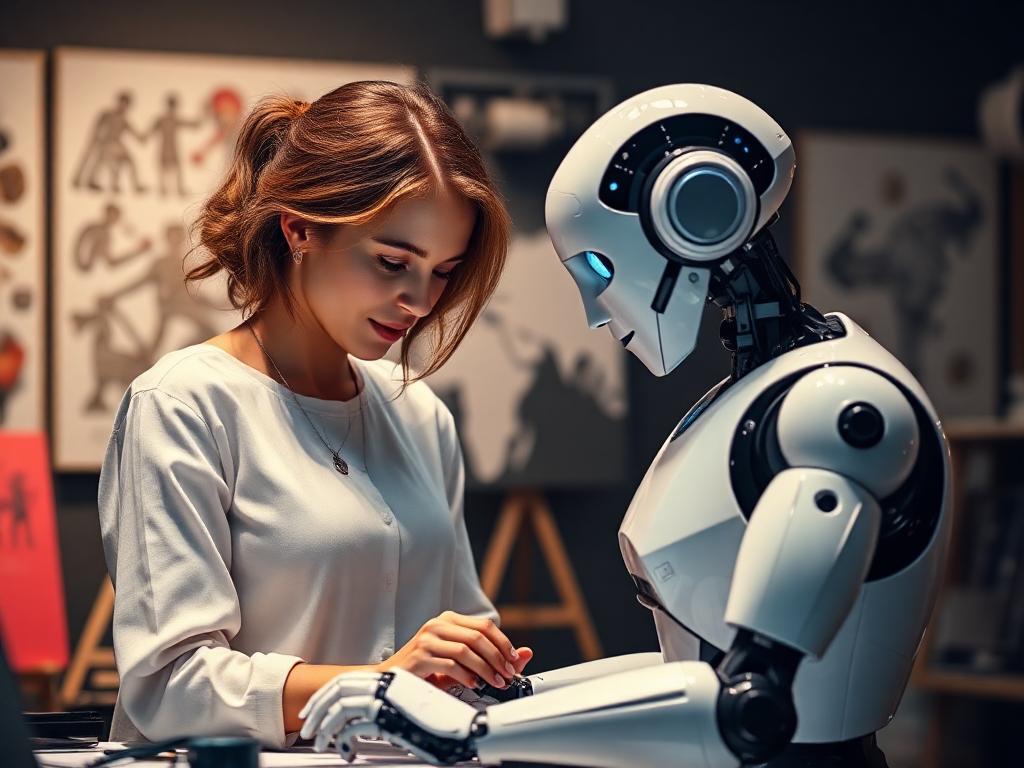
Defining "Creativity" in the Modern Age
Before we judge AI, we need to define the yardstick. True creativity is generally viewed as the ability to produce work that is both novel (new) and valuable (useful or meaningful).
But there is a third, often overlooked element: Intent. When a human paints a picture, they are often expressing a feeling, a memory, or a political statement. They have an intention. When AI paints a picture, it is fulfilling a mathematical probability based on a prompt.
How AI "Creates" (The Illusion of Innovation)
AI does not have an imagination. It has a dataset. When an AI writes a song, it isn't "feeling" the rhythm. It is analyzing millions of existing songs, identifying patterns, and predicting which notes usually follow one another.
The Human Process: Drawn from lived experience, emotion, trauma, and joy.
The AI Process: Drawn from pattern recognition and statistical probability.
So, while AI can create something that looks new, it is essentially remixing existing human knowledge at a speed no human can match. It is combinatorial, not originative.
Real-World Examples of AI "Creativity"
To understand where we stand, let’s look at what AI is currently achieving:
The Art World: In 2022, an AI-generated piece won a fine art competition at the Colorado State Fair. It was beautiful, but it sparked outrage. Was the "artist" the prompter, or the algorithm?
Music Completion: AI was used to "finish" Beethoven’s 10th Symphony. It analyzed all of Beethoven's previous work to predict how he would have ended the piece. The result was technically accurate, but critics argued it lacked the emotional "soul" of the composer.
Screenwriting: AI tools are now used to generate plot twists and character dialogue. While efficient, these scripts often rely on clichés because they are trained on existing movies.
The "Soul" Gap: What AI Is Missing
The biggest limitation of AI is that it has never lived.
AI has never had a broken heart.
AI has never felt the warmth of the sun.
AI has never feared death.
Great art often comes from the human condition—our vulnerabilities and our mortality. Because AI lacks consciousness and sensory experience, it cannot understand the subtext of what it creates. It can write a poem about love, but it doesn't know what love feels like.
Actionable Steps: How to Use AI to Boost Your Own Creativity
Instead of fearing AI as a replacement, we should view it as a collaborator. Here is how you can use AI to enhance your creative process:
The "Blank Page" Breaker: If you have writer's block, ask AI for 10 topic ideas. Most will be average, but one might spark a brilliant original thought in your mind.
Rapid Prototyping: If you are a designer, use AI to generate 50 rough concepts in minutes. Then, use your human taste to select and refine the best one.
The Devil’s Advocate: Ask AI to critique your work. Ask, "What is missing from this argument?" It can help you see blind spots you missed.
Conclusion: The Future is Collaborative
Is AI truly creative? In the strictest sense, no. It does not have intent, emotion, or consciousness. It is a mirror reflecting our own collective creativity back at us.
However, it is the most powerful creative tool ever invented. The future isn't about AI replacing artists; it's about artists who use AI replacing artists who don't. The magic happens not in the machine, but in the human who knows how to guide it.
Read Also : Ora Club Dubai: High-Energy Nightlife on the 44th Floor
 Wilman Kala
In just a few years, Artificial Intelligence (AI) has evolved from simple data processing to writing poetry, painting award-winning art, and composing symphonies.
Tools like ChatGPT and Midjourney have blurred the lines between man and machine. But this technological explosion begs a philosophical question: Is AI actually being creative, or is it just a high-tech parrot mimicking what already exists?
To answer this, we have to look at how AI works versus how the human mind works.
Defining "Creativity" in the Modern Age
Before we judge AI, we need to define the yardstick. True creativity is generally viewed as the ability to produce work that is both novel (new) and valuable (useful or meaningful).
But there is a third, often overlooked element: Intent. When a human paints a picture, they are often expressing a feeling, a memory, or a political statement. They have an intention. When AI paints a picture, it is fulfilling a mathematical probability based on a prompt.
How AI "Creates" (The Illusion of Innovation)
AI does not have an imagination. It has a dataset. When an AI writes a song, it isn't "feeling" the rhythm. It is analyzing millions of existing songs, identifying patterns, and predicting which notes usually follow one another.
The Human Process: Drawn from lived experience, emotion, trauma, and joy.
The AI Process: Drawn from pattern recognition and statistical probability.
So, while AI can create something that looks new, it is essentially remixing existing human knowledge at a speed no human can match. It is combinatorial, not originative.
Real-World Examples of AI "Creativity"
To understand where we stand, let’s look at what AI is currently achieving:
The Art World: In 2022, an AI-generated piece won a fine art competition at the Colorado State Fair. It was beautiful, but it sparked outrage. Was the "artist" the prompter, or the algorithm?
Music Completion: AI was used to "finish" Beethoven’s 10th Symphony. It analyzed all of Beethoven's previous work to predict how he would have ended the piece. The result was technically accurate, but critics argued it lacked the emotional "soul" of the composer.
Screenwriting: AI tools are now used to generate plot twists and character dialogue. While efficient, these scripts often rely on clichés because they are trained on existing movies.
The "Soul" Gap: What AI Is Missing
The biggest limitation of AI is that it has never lived.
AI has never had a broken heart.
AI has never felt the warmth of the sun.
AI has never feared death.
Great art often comes from the human condition—our vulnerabilities and our mortality. Because AI lacks consciousness and sensory experience, it cannot understand the subtext of what it creates. It can write a poem about love, but it doesn't know what love feels like.
Actionable Steps: How to Use AI to Boost Your Own Creativity
Instead of fearing AI as a replacement, we should view it as a collaborator. Here is how you can use AI to enhance your creative process:
The "Blank Page" Breaker: If you have writer's block, ask AI for 10 topic ideas. Most will be average, but one might spark a brilliant original thought in your mind.
Rapid Prototyping: If you are a designer, use AI to generate 50 rough concepts in minutes. Then, use your human taste to select and refine the best one.
The Devil’s Advocate: Ask AI to critique your work. Ask, "What is missing from this argument?" It can help you see blind spots you missed.
Conclusion: The Future is Collaborative
Is AI truly creative? In the strictest sense, no. It does not have intent, emotion, or consciousness. It is a mirror reflecting our own collective creativity back at us.
However, it is the most powerful creative tool ever invented. The future isn't about AI replacing artists; it's about artists who use AI replacing artists who don't. The magic happens not in the machine, but in the human who knows how to guide it.
Read Also : Ora Club Dubai: High-Energy Nightlife on the 44th Floor