Computers have changed our world in ways we could not have imagined just a few decades ago. The phone in your pocket, the laptop on your desk, and the massive servers that power the internet all work on the same basic idea. They use bits. These bits are always either a 0 or a 1. This system has served us well for many years. But scientists are now building a new kind of computer. It works very differently. It uses the strange rules of the tiny world of atoms and particles. This new machine is called a quantum computer.
People often think a quantum computer is just a faster version of a regular computer. That is not true. They are not the same thing at all. They do not work in the same way. They do not solve problems in the same way. To understand the difference, we must look at the very heart of how each machine processes information. This article will explain that difference in plain language. No complex math. No hard-to-understand physics. Just a clear look at what makes these two types of computers so different.
The Basic Building Block: Bits and Qubits
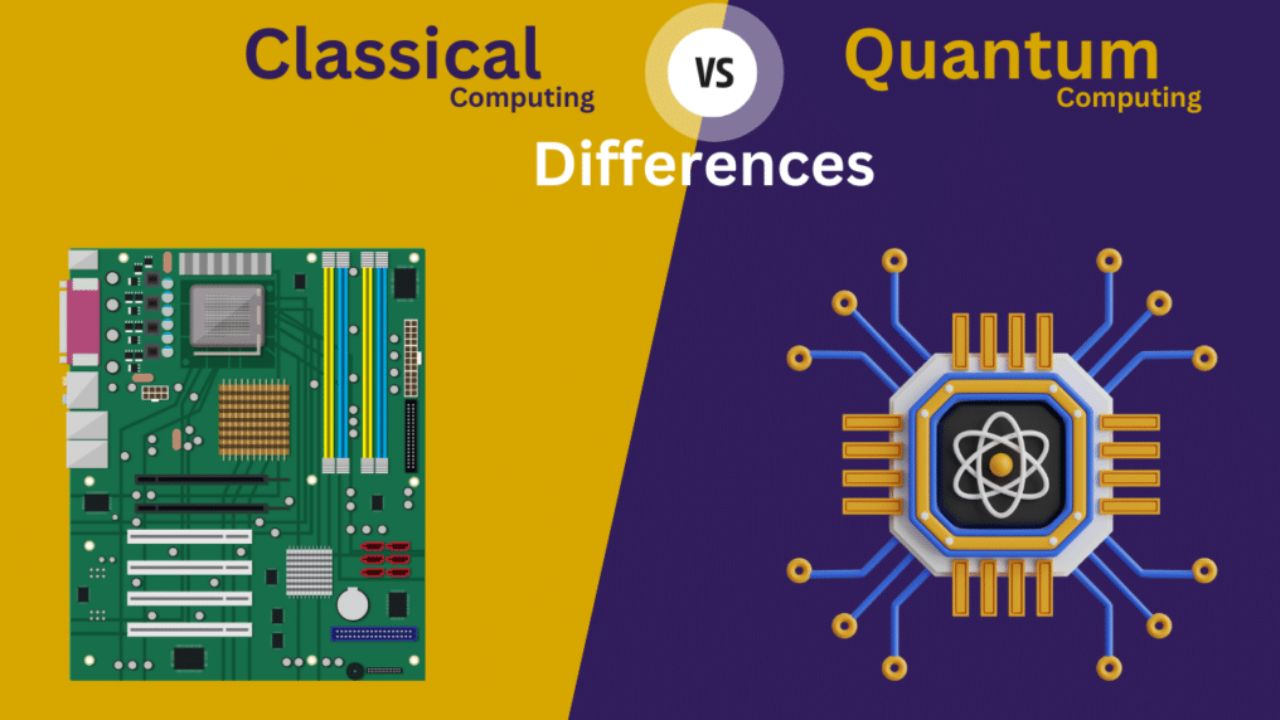
Every regular computer, from the simplest calculator to the most powerful supercomputer, is built from bits. A bit is the smallest piece of information a computer can hold. It has only two possible states. It is either a 0, or it is a 1. Think of it like a light switch. The switch is either on or off. There is no in-between. A computer stores everything as a long string of these 0s and 1s.
A quantum computer does not use bits. It uses qubits. Qubits are the building blocks of quantum computers. A qubit is also the smallest piece of information it can hold. But this is where the similarity ends. A qubit can be a 0. It can be a 1. But it can also be both at the same time. This is not like a light switch that is stuck halfway. It is more like a coin that is spinning in the air. Before it lands, it is neither heads nor tails. It is in a mix of both states. That is what a qubit is like. It is in a mix of both 0 and 1.
This ability to be in two states at once is called superposition. It is one of the main ideas that makes quantum computers so different from regular computers. A bit is solid and definite. It is always one thing. A qubit is flexible and uncertain. It can be many things at the same time.
Read Also: What is the role of quantum computing in scientific research?
How They Handle Information?
The difference between bits and qubits leads to a huge difference in how much information the two types of computers can handle.
Imagine you have two bits. They can hold only one combination of values at a time. They could be 00. Or 01. Or 10. Or 11. But they can only be one of these at any given moment.
Now imagine you have two qubits. Because each qubit can be in a mix of 0 and 1, the two qubits together can be in a mix of all four combinations at the same time. They can be 00, 01, 10, and 11 all at once. If you have three qubits, they can hold eight combinations at the same time. Four qubits can hold 16 combinations. Each time you add one qubit, you double the amount of information the system can hold at once. This is called exponential growth.
A regular computer works with information one step at a time. It does one calculation, then the next, then the next. Even with many processors working together, it is still following a set of step-by-step instructions. A quantum computer is different. Because its qubits can exist in many states at once, it can explore many possible solutions to a problem simultaneously. It is not just doing things faster. It is doing things in a fundamentally different way.
Entanglement: Connecting Qubits Together
There is another strange idea in quantum mechanics called entanglement. It is a special connection between qubits. When two qubits are entangled, they become linked. You cannot describe one without describing the other. Even if they are far apart, a change to one qubit will instantly affect the other.
In a regular computer, bits are independent. You can change one bit without affecting the others. This is not true for qubits. Entanglement allows a quantum computer to perform complex calculations that a regular computer cannot. It creates a kind of teamwork between qubits. This teamwork is a key part of what gives quantum computers their power.
Entanglement allows the quantum computer to keep track of complex relationships within a problem. A regular computer must create these relationships step by step, which takes a lot of time and memory. A quantum computer can build these relationships into its qubits from the start.
How They Give You an Answer
When a regular computer finishes a calculation, you get a clear answer. You put in the same numbers, you run the same program, and you get the same result every time. The process is predictable. This is because the computer is following a set of logical rules. The answer is determined.
When a quantum computer finishes a calculation, the answer is not always the same. The result is based on probability. When you measure a qubit, its superposition collapses. It becomes a definite 0 or 1. But you cannot be sure which one it will be. It is like spinning a coin. You know it will land on heads or tails. But you do not know which one until you look. The result is based on chance. The quantum computer runs the same calculation many times. It then looks at the pattern of results to find the most likely answer. It uses a process called interference. This process helps to make the correct answers more likely and the incorrect answers less likely.
This is a big difference. A regular computer gives you a single, definite answer. A quantum computer gives you a range of possible answers, each with a certain probability. You need to measure it many times to find the correct one.
The Conditions They Need to Work
You can use a regular computer just about anywhere. You can use it in a cold room. You can use it on a hot day. You can use it on a bumpy bus ride. The performance might change a little, but it will still work. Regular computers are designed to handle the real world. They are built with materials that are stable at room temperature. They can handle vibrations and small changes in the environment.
Quantum computers are very fragile. They are extremely sensitive to heat, noise, and vibrations. Any disturbance can destroy the superposition of the qubits. This is called decoherence. Once decoherence happens, the qubits become ordinary bits. The quantum computer loses its special power. To protect the qubits, quantum computers must be kept in very special conditions. Many of them are kept at a temperature close to absolute zero. This is much colder than outer space. They are also kept in special containers that protect them from vibrations and electromagnetic fields. You cannot just put a quantum computer on your desk.
These strict requirements are a major challenge for building and scaling quantum computers. They need massive amounts of power and complicated cooling systems. This makes them expensive and difficult to build.
What Each Type of Computer Is Good For?
Regular computers are excellent at everyday tasks. They are good for browsing the internet, writing documents, sending emails, watching videos, and playing games. They are also very good at tasks that involve following clear, step-by-step instructions. They are the workhorses of our digital world. They are also very good at solving most of the problems we face today, from managing databases to running complex software.
Quantum computers are not meant to replace regular computers. They are good at a very specific set of problems. These are problems that are too complex for regular computers to solve in a reasonable amount of time.
One of the most famous examples is simulating molecules and chemical reactions. This is important for discovering new drugs and new materials. A regular computer has to use approximations because it cannot model all the complex quantum interactions. A quantum computer can model these interactions naturally because it is based on the same rules.
Another important problem is breaking encryption. Many of the security systems we use today are based on the difficulty of factoring large numbers. Regular computers find this very hard. But a quantum computer could do it quickly. This is a major security concern. It is why governments and companies are working hard to develop new forms of encryption that are safe against quantum computers.
Quantum computers are also good at solving complex optimization problems. These are problems like finding the best route for a delivery truck or the most efficient way to schedule flights. A regular computer has to check many different options one by one. A quantum computer could check many options at the same time.
You May Also Like: How quantum computing will affect artificial intelligence applications in healthcare?
The Future of Computing
Regular computers and quantum computers are not rivals. They are partners. They will work together in the future. The regular computer will handle the everyday tasks. It will manage the data. It will run the user interface. The quantum computer will act as a special processor. It will take on the very hard problems that the regular computer cannot solve. They will work together to create a new generation of powerful computing systems.
Quantum computing is still a new field. The machines we have today are small and have a lot of errors. They are not yet more powerful than regular computers for most problems. But the technology is advancing quickly. Scientists are building more qubits. They are finding ways to make them more stable. They are developing new ways to fix errors. We are still in the early days of quantum computing. But it is clear that this new technology will change the world in ways we cannot yet imagine. It will help us solve problems that were once impossible. And it will all be based on a very different idea of how to process information.
Conclusion
The difference between quantum and classical computing comes down to the basic rules of how they store and process information. Classical computers use bits that are definite 0s and 1s. They work in a straightforward, step-by-step way. They are reliable and easy to use. They are the foundation of the modern world.
Quantum computers use qubits that can be in multiple states at once. They use superposition and entanglement. They work with probabilities. They are fragile and need special conditions. But they have the potential to solve problems that are far beyond the reach of any regular computer.
The future of computing is not about one replacing the other. It is about using each machine for what it does best. Quantum computers will not make our laptops obsolete. Instead, they will open up new possibilities in science, medicine, and security. They will help us solve the problems that have always been too big for our regular computers to handle.
 Willow Stella
Computers have changed our world in ways we could not have imagined just a few decades ago. The phone in your pocket, the laptop on your desk, and the massive servers that power the internet all work on the same basic idea. They use bits. These bits are always either a 0 or a 1. This system has served us well for many years. But scientists are now building a new kind of computer. It works very differently. It uses the strange rules of the tiny world of atoms and particles. This new machine is called a quantum computer.
People often think a quantum computer is just a faster version of a regular computer. That is not true. They are not the same thing at all. They do not work in the same way. They do not solve problems in the same way. To understand the difference, we must look at the very heart of how each machine processes information. This article will explain that difference in plain language. No complex math. No hard-to-understand physics. Just a clear look at what makes these two types of computers so different.
The Basic Building Block: Bits and Qubits
Every regular computer, from the simplest calculator to the most powerful supercomputer, is built from bits. A bit is the smallest piece of information a computer can hold. It has only two possible states. It is either a 0, or it is a 1. Think of it like a light switch. The switch is either on or off. There is no in-between. A computer stores everything as a long string of these 0s and 1s.
A quantum computer does not use bits. It uses qubits. Qubits are the building blocks of quantum computers. A qubit is also the smallest piece of information it can hold. But this is where the similarity ends. A qubit can be a 0. It can be a 1. But it can also be both at the same time. This is not like a light switch that is stuck halfway. It is more like a coin that is spinning in the air. Before it lands, it is neither heads nor tails. It is in a mix of both states. That is what a qubit is like. It is in a mix of both 0 and 1.
This ability to be in two states at once is called superposition. It is one of the main ideas that makes quantum computers so different from regular computers. A bit is solid and definite. It is always one thing. A qubit is flexible and uncertain. It can be many things at the same time.
Read Also: What is the role of quantum computing in scientific research?
How They Handle Information?
The difference between bits and qubits leads to a huge difference in how much information the two types of computers can handle.
Imagine you have two bits. They can hold only one combination of values at a time. They could be 00. Or 01. Or 10. Or 11. But they can only be one of these at any given moment.
Now imagine you have two qubits. Because each qubit can be in a mix of 0 and 1, the two qubits together can be in a mix of all four combinations at the same time. They can be 00, 01, 10, and 11 all at once. If you have three qubits, they can hold eight combinations at the same time. Four qubits can hold 16 combinations. Each time you add one qubit, you double the amount of information the system can hold at once. This is called exponential growth.
A regular computer works with information one step at a time. It does one calculation, then the next, then the next. Even with many processors working together, it is still following a set of step-by-step instructions. A quantum computer is different. Because its qubits can exist in many states at once, it can explore many possible solutions to a problem simultaneously. It is not just doing things faster. It is doing things in a fundamentally different way.
Entanglement: Connecting Qubits Together
There is another strange idea in quantum mechanics called entanglement. It is a special connection between qubits. When two qubits are entangled, they become linked. You cannot describe one without describing the other. Even if they are far apart, a change to one qubit will instantly affect the other.
In a regular computer, bits are independent. You can change one bit without affecting the others. This is not true for qubits. Entanglement allows a quantum computer to perform complex calculations that a regular computer cannot. It creates a kind of teamwork between qubits. This teamwork is a key part of what gives quantum computers their power.
Entanglement allows the quantum computer to keep track of complex relationships within a problem. A regular computer must create these relationships step by step, which takes a lot of time and memory. A quantum computer can build these relationships into its qubits from the start.
How They Give You an Answer
When a regular computer finishes a calculation, you get a clear answer. You put in the same numbers, you run the same program, and you get the same result every time. The process is predictable. This is because the computer is following a set of logical rules. The answer is determined.
When a quantum computer finishes a calculation, the answer is not always the same. The result is based on probability. When you measure a qubit, its superposition collapses. It becomes a definite 0 or 1. But you cannot be sure which one it will be. It is like spinning a coin. You know it will land on heads or tails. But you do not know which one until you look. The result is based on chance. The quantum computer runs the same calculation many times. It then looks at the pattern of results to find the most likely answer. It uses a process called interference. This process helps to make the correct answers more likely and the incorrect answers less likely.
This is a big difference. A regular computer gives you a single, definite answer. A quantum computer gives you a range of possible answers, each with a certain probability. You need to measure it many times to find the correct one.
The Conditions They Need to Work
You can use a regular computer just about anywhere. You can use it in a cold room. You can use it on a hot day. You can use it on a bumpy bus ride. The performance might change a little, but it will still work. Regular computers are designed to handle the real world. They are built with materials that are stable at room temperature. They can handle vibrations and small changes in the environment.
Quantum computers are very fragile. They are extremely sensitive to heat, noise, and vibrations. Any disturbance can destroy the superposition of the qubits. This is called decoherence. Once decoherence happens, the qubits become ordinary bits. The quantum computer loses its special power. To protect the qubits, quantum computers must be kept in very special conditions. Many of them are kept at a temperature close to absolute zero. This is much colder than outer space. They are also kept in special containers that protect them from vibrations and electromagnetic fields. You cannot just put a quantum computer on your desk.
These strict requirements are a major challenge for building and scaling quantum computers. They need massive amounts of power and complicated cooling systems. This makes them expensive and difficult to build.
What Each Type of Computer Is Good For?
Regular computers are excellent at everyday tasks. They are good for browsing the internet, writing documents, sending emails, watching videos, and playing games. They are also very good at tasks that involve following clear, step-by-step instructions. They are the workhorses of our digital world. They are also very good at solving most of the problems we face today, from managing databases to running complex software.
Quantum computers are not meant to replace regular computers. They are good at a very specific set of problems. These are problems that are too complex for regular computers to solve in a reasonable amount of time.
One of the most famous examples is simulating molecules and chemical reactions. This is important for discovering new drugs and new materials. A regular computer has to use approximations because it cannot model all the complex quantum interactions. A quantum computer can model these interactions naturally because it is based on the same rules.
Another important problem is breaking encryption. Many of the security systems we use today are based on the difficulty of factoring large numbers. Regular computers find this very hard. But a quantum computer could do it quickly. This is a major security concern. It is why governments and companies are working hard to develop new forms of encryption that are safe against quantum computers.
Quantum computers are also good at solving complex optimization problems. These are problems like finding the best route for a delivery truck or the most efficient way to schedule flights. A regular computer has to check many different options one by one. A quantum computer could check many options at the same time.
You May Also Like: How quantum computing will affect artificial intelligence applications in healthcare?
The Future of Computing
Regular computers and quantum computers are not rivals. They are partners. They will work together in the future. The regular computer will handle the everyday tasks. It will manage the data. It will run the user interface. The quantum computer will act as a special processor. It will take on the very hard problems that the regular computer cannot solve. They will work together to create a new generation of powerful computing systems.
Quantum computing is still a new field. The machines we have today are small and have a lot of errors. They are not yet more powerful than regular computers for most problems. But the technology is advancing quickly. Scientists are building more qubits. They are finding ways to make them more stable. They are developing new ways to fix errors. We are still in the early days of quantum computing. But it is clear that this new technology will change the world in ways we cannot yet imagine. It will help us solve problems that were once impossible. And it will all be based on a very different idea of how to process information.
Conclusion
The difference between quantum and classical computing comes down to the basic rules of how they store and process information. Classical computers use bits that are definite 0s and 1s. They work in a straightforward, step-by-step way. They are reliable and easy to use. They are the foundation of the modern world.
Quantum computers use qubits that can be in multiple states at once. They use superposition and entanglement. They work with probabilities. They are fragile and need special conditions. But they have the potential to solve problems that are far beyond the reach of any regular computer.
The future of computing is not about one replacing the other. It is about using each machine for what it does best. Quantum computers will not make our laptops obsolete. Instead, they will open up new possibilities in science, medicine, and security. They will help us solve the problems that have always been too big for our regular computers to handle.