The dress blue pants are considered to have perhaps the most recognizable design with thirteen buttons on them and belonging to the US Navy. It may seem rather strange to even include at first glance but the design is steeped in tradition and has great meaning and practicality in the Navy.
There are customs among navigators all across the world, some of which go back hundreds of years. Many are so old that people have forgotten where they came from. But there is a well-known rationale for one habit in particular: the 13-button pants that US Navy men wore. Though there are many hypotheses on their secondary use, the fundamental reason is practical.
Why Do Navy Dress Blue Pants Have 13 Buttons?
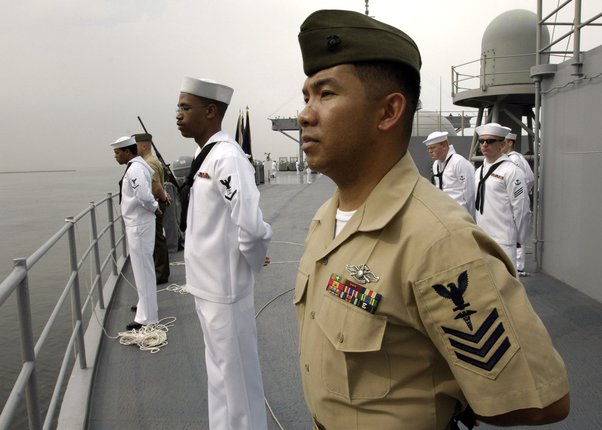
According to an ancient sailor's story, the buttons stand in for the thirteen original colonies. The famous trouser's "broadfall," or front flap (crotch area), had fifteen buttons in the early 1800s. Ninety years later, it was changed to have just seven buttons so the manufacturer could use less material. During basic training, Navy recruits tell each other that, at least, but that wasn't the true goal.
Read Also: Why Did the US Navy Switch to Bell Bottoms?
The famous trouser's "broadfall," or front flap (crotch area), had fifteen buttons in the early 1800s. Ninety years later, it was changed to have just seven buttons so the manufacturer could use less material. Many sailors reportedly didn't have enough space down there, so the Navy responded and added the extra material and six buttons, which led to the broadfall being enlarged years later.

Pro tip: To make it easier to get the goods, many sailors have their pants altered to remove all of the buttons and replace them with Velcro strips. After that, they resewed the buttons to the exterior flap while keeping the uniform inspectors in the dark.
Rank and Rating Insignia
The white "piping" strips come next. They began as ornaments, but beginning around 1866, rank was shown by piping on the collar and cuffs, and some ratings wore shoulder insignia. In 1865, chevron shoulder insignia were created to indicate rank, and in 1866, rating badges were developed and standardized for all ratings.
In 1876, the cuff stripes and petty officer insignia were used to distinguish rank, and the white piping on the collar was standardized to three rows for all enlisted personnel wearing the jumper. The emblem was worn on the right shoulder by certain ratings and on the left by others.
Read Also: US Navy Aircraft Carriers Carry Out Ordnance Transfer
A "rating" is given to an enlisted sailor in the US Navy either at the time of enlistment or upon promotion to Petty Officer Third Class. People in a rating essentially form a community of practice with common interests and even a shared culture, and their rating reflects the kind of work they conduct. The sign on top of the patch indicates the sailor's rate; because it has wings, the one in the picture appears to be an aviation rating.
The sailor's rank is indicated by the chevrons, which are "V" shaped bands on the shoulder patch. Third Class is represented by one chevron, and each rank up to First Class with three chevrons is represented by one more. Red is the standard hue, and sailors wear gold if they can avoid problems for 12 years. Each "hash mark," which is an angled stripe on the lower sleeve, represents four years of service.
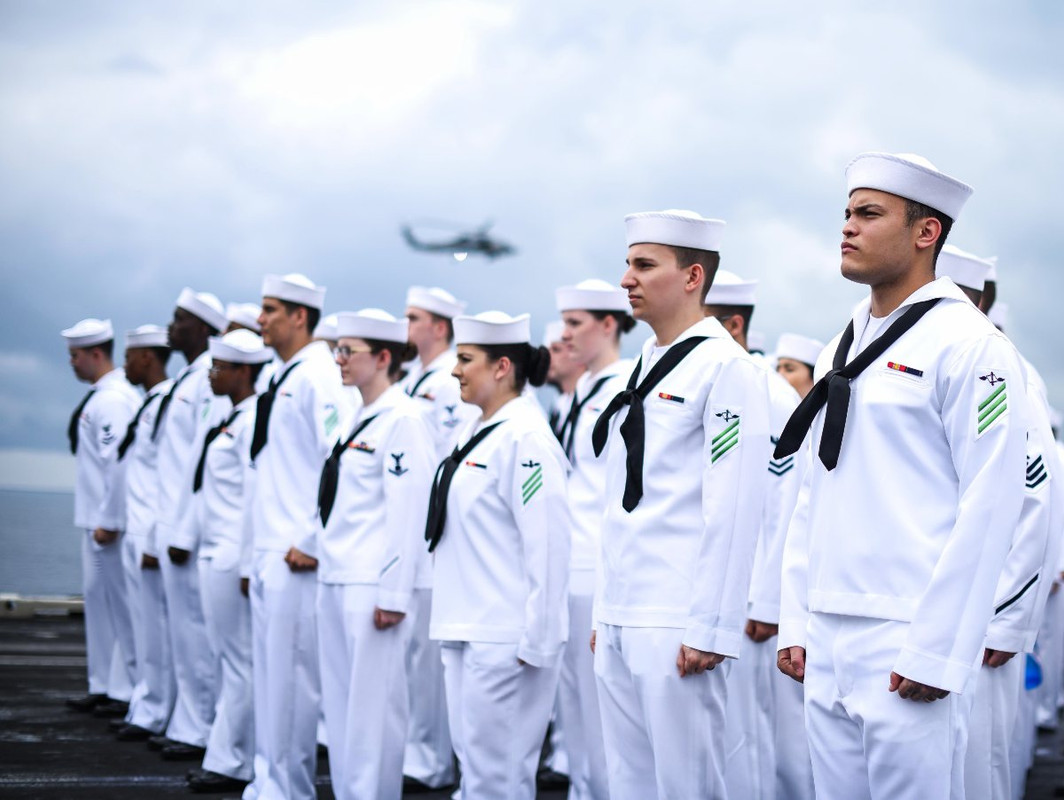
The colored objects on the sailor's breast are called "ribbons," which are their military decorations. A matching medal will be worn with full dress uniforms for certain ribbons. A rigorous qualification program is required to achieve the combat specialty insignia above and below their ribbons. Surface warfare, submarine qualified, and aviation crewman are the most frequently used insignia; nevertheless, there are a number of other badges for specialized communities (such as SEALS).
Neckerchief / Tie
The knot or neckerchief comes next. The neckerchief is said to have originated in the 16th century and was mostly used as a sweat cloth and to shield sailors' necks from the harsh pressure of their stiff collared shirts. The 36-square-inch silk fabric might also be used as a tourniquet or combat dressing in some life-saving circumstances.
The Navy introduced the square knot in 1817 because it wanted all of its sailors to tie their neckerchiefs in the same manner. Because it was frequently employed on ships to secure their cargo, the square knot was hand-picked. Later, to symbolize the diligent Navy tradition, the knot was introduced to the dress blue uniform, and it still is.
Trousers
Next are the well-known 13 buttons on the uniform pants' flap. Buttons were the sole kind of clothing fastening used before the invention of the modern zipper in 1913. There is a myth that the 13 buttons stand for the original 13 colonies, but this is untrue. The famous trouser's "broadfall," or front flap (crotch area), had fifteen buttons in the early 1800s.
Ninety years later, it was changed to have just seven buttons so that the maker could use less material. A lot of sailors reportedly had trouble finding enough space down there, so the Navy responded and added the extra material and six buttons, which led to the broadfall being enlarged years later.
Read Also : Are More Women Joining The Health And Fitness Industry?
 Nora Hazel
The dress blue pants are considered to have perhaps the most recognizable design with thirteen buttons on them and belonging to the US Navy. It may seem rather strange to even include at first glance but the design is steeped in tradition and has great meaning and practicality in the Navy.
There are customs among navigators all across the world, some of which go back hundreds of years. Many are so old that people have forgotten where they came from. But there is a well-known rationale for one habit in particular: the 13-button pants that US Navy men wore. Though there are many hypotheses on their secondary use, the fundamental reason is practical.
Why Do Navy Dress Blue Pants Have 13 Buttons?
According to an ancient sailor's story, the buttons stand in for the thirteen original colonies. The famous trouser's "broadfall," or front flap (crotch area), had fifteen buttons in the early 1800s. Ninety years later, it was changed to have just seven buttons so the manufacturer could use less material. During basic training, Navy recruits tell each other that, at least, but that wasn't the true goal.
Read Also: Why Did the US Navy Switch to Bell Bottoms?
The famous trouser's "broadfall," or front flap (crotch area), had fifteen buttons in the early 1800s. Ninety years later, it was changed to have just seven buttons so the manufacturer could use less material. Many sailors reportedly didn't have enough space down there, so the Navy responded and added the extra material and six buttons, which led to the broadfall being enlarged years later.
Pro tip: To make it easier to get the goods, many sailors have their pants altered to remove all of the buttons and replace them with Velcro strips. After that, they resewed the buttons to the exterior flap while keeping the uniform inspectors in the dark.
Rank and Rating Insignia
The white "piping" strips come next. They began as ornaments, but beginning around 1866, rank was shown by piping on the collar and cuffs, and some ratings wore shoulder insignia. In 1865, chevron shoulder insignia were created to indicate rank, and in 1866, rating badges were developed and standardized for all ratings.
In 1876, the cuff stripes and petty officer insignia were used to distinguish rank, and the white piping on the collar was standardized to three rows for all enlisted personnel wearing the jumper. The emblem was worn on the right shoulder by certain ratings and on the left by others.
Read Also: US Navy Aircraft Carriers Carry Out Ordnance Transfer
A "rating" is given to an enlisted sailor in the US Navy either at the time of enlistment or upon promotion to Petty Officer Third Class. People in a rating essentially form a community of practice with common interests and even a shared culture, and their rating reflects the kind of work they conduct. The sign on top of the patch indicates the sailor's rate; because it has wings, the one in the picture appears to be an aviation rating.
The sailor's rank is indicated by the chevrons, which are "V" shaped bands on the shoulder patch. Third Class is represented by one chevron, and each rank up to First Class with three chevrons is represented by one more. Red is the standard hue, and sailors wear gold if they can avoid problems for 12 years. Each "hash mark," which is an angled stripe on the lower sleeve, represents four years of service.
The colored objects on the sailor's breast are called "ribbons," which are their military decorations. A matching medal will be worn with full dress uniforms for certain ribbons. A rigorous qualification program is required to achieve the combat specialty insignia above and below their ribbons. Surface warfare, submarine qualified, and aviation crewman are the most frequently used insignia; nevertheless, there are a number of other badges for specialized communities (such as SEALS).
Neckerchief / Tie
The knot or neckerchief comes next. The neckerchief is said to have originated in the 16th century and was mostly used as a sweat cloth and to shield sailors' necks from the harsh pressure of their stiff collared shirts. The 36-square-inch silk fabric might also be used as a tourniquet or combat dressing in some life-saving circumstances.
The Navy introduced the square knot in 1817 because it wanted all of its sailors to tie their neckerchiefs in the same manner. Because it was frequently employed on ships to secure their cargo, the square knot was hand-picked. Later, to symbolize the diligent Navy tradition, the knot was introduced to the dress blue uniform, and it still is.
Trousers
Next are the well-known 13 buttons on the uniform pants' flap. Buttons were the sole kind of clothing fastening used before the invention of the modern zipper in 1913. There is a myth that the 13 buttons stand for the original 13 colonies, but this is untrue. The famous trouser's "broadfall," or front flap (crotch area), had fifteen buttons in the early 1800s.
Ninety years later, it was changed to have just seven buttons so that the maker could use less material. A lot of sailors reportedly had trouble finding enough space down there, so the Navy responded and added the extra material and six buttons, which led to the broadfall being enlarged years later.
Read Also : Are More Women Joining The Health And Fitness Industry?