Few military units in the world carry the legendary reputation of the 82nd Airborne Division. Known as the “All American Division,” the 82nd Airborne has earned global recognition for its courage, rapid deployment capability, and historic role in some of the most decisive battles of modern warfare. From parachuting behind enemy lines during World War II to responding to modern global crises within hours, the division symbolizes elite readiness and bravery.
But what exactly makes the 82nd Airborne so famous? Its reputation comes from a combination of history, innovation, battlefield performance, and an enduring culture of excellence. This article explores the origins, achievements, and lasting legacy that made the 82nd Airborne one of the most respected military formations in history.
Origins of the 82nd Airborne Division
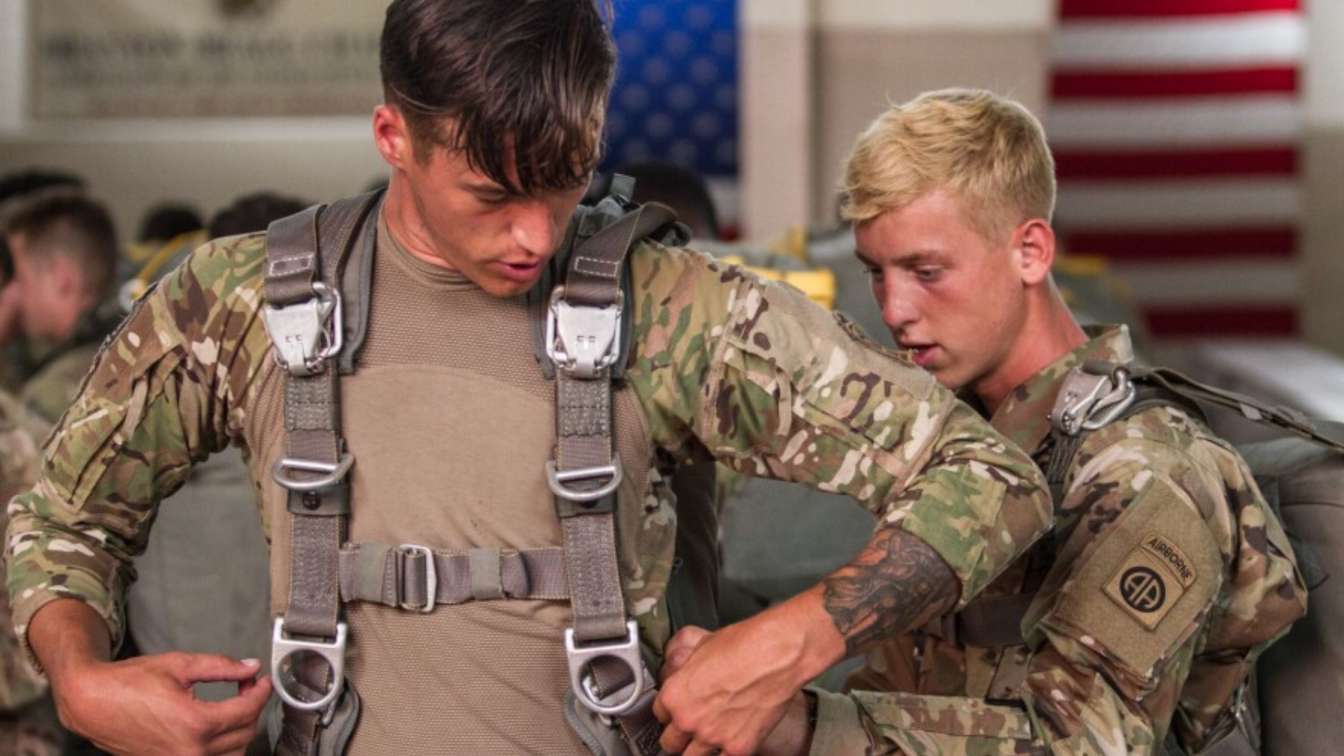
The 82nd Division was first activated in 1917 during World War I at Camp Gordon, Georgia. Initially, it was an infantry division composed of soldiers from all 48 U.S. states, which earned it the nickname “All American.” The patch featuring the double “AA” remains one of the most recognizable military insignias today.
During World War I, the division fought in major campaigns including the Meuse-Argonne Offensive. Although airborne warfare did not yet exist, the division established a reputation for discipline and effectiveness early in its history.
After the war, the unit was deactivated, but global tensions leading into World War II would soon transform it into something revolutionary.
Read Also: Is the 82nd Airborne Division deploying to Iran today?
The Birth of America’s Elite Paratroopers
In 1942, the U.S. Army converted the 82nd Infantry Division into an airborne division — one of the first of its kind. This marked a dramatic shift in military strategy.
Airborne soldiers were trained to parachute into enemy territory, often at night, carrying limited supplies and facing overwhelming odds until reinforcements arrived. The training was intense and physically demanding, creating a culture of elite performance.
Becoming a paratrooper required extraordinary endurance, courage, and mental toughness. Soldiers had to master airborne operations, small-unit tactics, and survival skills. This rigorous selection process helped establish the division’s elite reputation.
World War II: The Foundation of Its Fame
The 82nd Airborne Division became internationally famous during World War II, where airborne operations reshaped modern warfare.
Sicily and Italy
The division conducted its first combat parachute assault during the Allied invasion of Sicily in 1943. Despite scattered drops and heavy resistance, paratroopers disrupted enemy defenses and proved airborne forces could succeed in large-scale combat.
Soon after, they participated in the Italian campaign, further refining airborne tactics under real battlefield conditions.
D-Day and Normandy
The defining moment in the division’s history came during D-Day on June 6, 1944.
In the early hours before the beach landings, 82nd Airborne paratroopers jumped into Normandy behind German lines. Their mission included:
The drops were chaotic. Soldiers landed miles apart, often isolated and surrounded. Yet small groups regrouped and completed their objectives, demonstrating remarkable adaptability and leadership.
Their success played a critical role in enabling Allied forces to establish a foothold in Nazi-occupied France.
Operation Market Garden
Later in 1944, the division participated in Operation Market Garden, one of the largest airborne operations ever attempted.
The 82nd Airborne captured key bridges in the Netherlands under intense combat conditions. Although the overall operation fell short of its strategic goals, the division’s performance earned widespread admiration for resilience and determination.
Battle of the Bulge
During the brutal winter of 1944–45, the division helped stop Germany’s final major offensive in the Battle of the Bulge.
Rapidly deployed to Belgium, the 82nd Airborne defended critical positions against experienced German forces. Fighting in freezing temperatures with limited supplies, they held their ground and contributed significantly to the Allied victory.
This battle cemented their image as reliable shock troops capable of performing under extreme pressure.
Rapid Deployment: “America’s Guard of Honor”
One major reason for the division’s fame is its readiness.
Unlike conventional units, the 82nd Airborne maintains a constant rapid-response mission. Soldiers can deploy anywhere in the world within 18 hours. Because of this capability, the division often becomes the first American military presence during global crises.
This readiness has earned it nicknames such as:
Their ability to mobilize quickly makes them a key tool in U.S. foreign policy and humanitarian operations.
Cold War and Modern Conflicts
After World War II, the 82nd Airborne continued to play major roles across decades of geopolitical tension.
Dominican Republic (1965)
The division deployed to stabilize the region during political unrest, demonstrating rapid deployment effectiveness during the Cold War.
Grenada (1983)
During Operation Urgent Fury, paratroopers conducted airborne and air-assault operations to secure the island.
Panama (1989)
In Operation Just Cause, the division helped remove dictator Manuel Noriega, showcasing modern airborne warfare capabilities.
Iraq and Afghanistan Wars
Following the September 11 attacks, the 82nd Airborne became heavily involved in operations in Iraq and Afghanistan.
Paratroopers conducted:
Their deployments reinforced the division’s reputation as adaptable soldiers capable of handling both conventional warfare and modern asymmetric conflicts.
Elite Training and Culture
The fame of the 82nd Airborne also comes from its demanding culture.
Airborne Qualification
Every soldier must earn parachutist wings through airborne school, completing multiple jumps from military aircraft. Training emphasizes:
This shared experience creates a strong bond among paratroopers.
“All American” Identity
The division’s motto and traditions foster deep pride and unity. Soldiers often describe airborne service not just as a job but as an identity.
Key cultural traits include:
These qualities contribute significantly to its legendary status.
Symbolism and Public Recognition
The 82nd Airborne Division holds a special place in American culture.
It frequently appears in:
Veterans of the division are often celebrated for their contributions to freedom and global stability.
Annual commemorations and reunions keep the division’s history alive, ensuring new generations understand its sacrifices.
Humanitarian and Peacekeeping Missions
The division is not famous solely for combat. It has also played major roles in humanitarian operations.
Paratroopers have assisted in:
These missions demonstrate versatility beyond warfare, enhancing global respect for the unit.
Why the 82nd Airborne Still Matters Today?
Modern warfare requires flexibility, speed, and technological integration — qualities the 82nd Airborne continues to embody.
Today’s paratroopers train with advanced equipment, drones, and modern communication systems while preserving traditional airborne tactics.
Their mission remains clear: deploy fast, fight effectively, and stabilize crises before they escalate.
In an unpredictable world, such readiness ensures the division remains strategically important.
Key Reasons the 82nd Airborne Is So Famous
Summarizing its legacy, the division’s fame comes from several factors:
Few military units combine historical significance with modern relevance as successfully.
Conclusion
The fame of the 82nd Airborne Division is not the result of a single battle or era. Instead, it comes from over a century of courage, innovation, and readiness.
From parachuting into Normandy under enemy fire to responding rapidly to modern global crises, the division has repeatedly proven its value on the world stage. Its soldiers represent a unique blend of skill, discipline, and bravery that continues to inspire respect worldwide.
Ultimately, the 82nd Airborne is famous because it represents something larger than a military unit — it symbolizes preparedness, sacrifice, and the enduring spirit of those willing to jump into uncertainty for the mission and for each other.
 Thomas Hardy
Few military units in the world carry the legendary reputation of the 82nd Airborne Division. Known as the “All American Division,” the 82nd Airborne has earned global recognition for its courage, rapid deployment capability, and historic role in some of the most decisive battles of modern warfare. From parachuting behind enemy lines during World War II to responding to modern global crises within hours, the division symbolizes elite readiness and bravery.
But what exactly makes the 82nd Airborne so famous? Its reputation comes from a combination of history, innovation, battlefield performance, and an enduring culture of excellence. This article explores the origins, achievements, and lasting legacy that made the 82nd Airborne one of the most respected military formations in history.
Origins of the 82nd Airborne Division
The 82nd Division was first activated in 1917 during World War I at Camp Gordon, Georgia. Initially, it was an infantry division composed of soldiers from all 48 U.S. states, which earned it the nickname “All American.” The patch featuring the double “AA” remains one of the most recognizable military insignias today.
During World War I, the division fought in major campaigns including the Meuse-Argonne Offensive. Although airborne warfare did not yet exist, the division established a reputation for discipline and effectiveness early in its history.
After the war, the unit was deactivated, but global tensions leading into World War II would soon transform it into something revolutionary.
Read Also: Is the 82nd Airborne Division deploying to Iran today?
The Birth of America’s Elite Paratroopers
In 1942, the U.S. Army converted the 82nd Infantry Division into an airborne division — one of the first of its kind. This marked a dramatic shift in military strategy.
Airborne soldiers were trained to parachute into enemy territory, often at night, carrying limited supplies and facing overwhelming odds until reinforcements arrived. The training was intense and physically demanding, creating a culture of elite performance.
Becoming a paratrooper required extraordinary endurance, courage, and mental toughness. Soldiers had to master airborne operations, small-unit tactics, and survival skills. This rigorous selection process helped establish the division’s elite reputation.
World War II: The Foundation of Its Fame
The 82nd Airborne Division became internationally famous during World War II, where airborne operations reshaped modern warfare.
Sicily and Italy
The division conducted its first combat parachute assault during the Allied invasion of Sicily in 1943. Despite scattered drops and heavy resistance, paratroopers disrupted enemy defenses and proved airborne forces could succeed in large-scale combat.
Soon after, they participated in the Italian campaign, further refining airborne tactics under real battlefield conditions.
D-Day and Normandy
The defining moment in the division’s history came during D-Day on June 6, 1944.
In the early hours before the beach landings, 82nd Airborne paratroopers jumped into Normandy behind German lines. Their mission included:
The drops were chaotic. Soldiers landed miles apart, often isolated and surrounded. Yet small groups regrouped and completed their objectives, demonstrating remarkable adaptability and leadership.
Their success played a critical role in enabling Allied forces to establish a foothold in Nazi-occupied France.
Operation Market Garden
Later in 1944, the division participated in Operation Market Garden, one of the largest airborne operations ever attempted.
The 82nd Airborne captured key bridges in the Netherlands under intense combat conditions. Although the overall operation fell short of its strategic goals, the division’s performance earned widespread admiration for resilience and determination.
Battle of the Bulge
During the brutal winter of 1944–45, the division helped stop Germany’s final major offensive in the Battle of the Bulge.
Rapidly deployed to Belgium, the 82nd Airborne defended critical positions against experienced German forces. Fighting in freezing temperatures with limited supplies, they held their ground and contributed significantly to the Allied victory.
This battle cemented their image as reliable shock troops capable of performing under extreme pressure.
Rapid Deployment: “America’s Guard of Honor”
One major reason for the division’s fame is its readiness.
Unlike conventional units, the 82nd Airborne maintains a constant rapid-response mission. Soldiers can deploy anywhere in the world within 18 hours. Because of this capability, the division often becomes the first American military presence during global crises.
This readiness has earned it nicknames such as:
Their ability to mobilize quickly makes them a key tool in U.S. foreign policy and humanitarian operations.
Cold War and Modern Conflicts
After World War II, the 82nd Airborne continued to play major roles across decades of geopolitical tension.
Dominican Republic (1965)
The division deployed to stabilize the region during political unrest, demonstrating rapid deployment effectiveness during the Cold War.
Grenada (1983)
During Operation Urgent Fury, paratroopers conducted airborne and air-assault operations to secure the island.
Panama (1989)
In Operation Just Cause, the division helped remove dictator Manuel Noriega, showcasing modern airborne warfare capabilities.
Iraq and Afghanistan Wars
Following the September 11 attacks, the 82nd Airborne became heavily involved in operations in Iraq and Afghanistan.
Paratroopers conducted:
Their deployments reinforced the division’s reputation as adaptable soldiers capable of handling both conventional warfare and modern asymmetric conflicts.
Elite Training and Culture
The fame of the 82nd Airborne also comes from its demanding culture.
Airborne Qualification
Every soldier must earn parachutist wings through airborne school, completing multiple jumps from military aircraft. Training emphasizes:
This shared experience creates a strong bond among paratroopers.
“All American” Identity
The division’s motto and traditions foster deep pride and unity. Soldiers often describe airborne service not just as a job but as an identity.
Key cultural traits include:
These qualities contribute significantly to its legendary status.
Symbolism and Public Recognition
The 82nd Airborne Division holds a special place in American culture.
It frequently appears in:
Veterans of the division are often celebrated for their contributions to freedom and global stability.
Annual commemorations and reunions keep the division’s history alive, ensuring new generations understand its sacrifices.
Humanitarian and Peacekeeping Missions
The division is not famous solely for combat. It has also played major roles in humanitarian operations.
Paratroopers have assisted in:
These missions demonstrate versatility beyond warfare, enhancing global respect for the unit.
Why the 82nd Airborne Still Matters Today?
Modern warfare requires flexibility, speed, and technological integration — qualities the 82nd Airborne continues to embody.
Today’s paratroopers train with advanced equipment, drones, and modern communication systems while preserving traditional airborne tactics.
Their mission remains clear: deploy fast, fight effectively, and stabilize crises before they escalate.
In an unpredictable world, such readiness ensures the division remains strategically important.
Key Reasons the 82nd Airborne Is So Famous
Summarizing its legacy, the division’s fame comes from several factors:
Few military units combine historical significance with modern relevance as successfully.
Conclusion
The fame of the 82nd Airborne Division is not the result of a single battle or era. Instead, it comes from over a century of courage, innovation, and readiness.
From parachuting into Normandy under enemy fire to responding rapidly to modern global crises, the division has repeatedly proven its value on the world stage. Its soldiers represent a unique blend of skill, discipline, and bravery that continues to inspire respect worldwide.
Ultimately, the 82nd Airborne is famous because it represents something larger than a military unit — it symbolizes preparedness, sacrifice, and the enduring spirit of those willing to jump into uncertainty for the mission and for each other.